I spent a year learning Spanish because I was tired of feeling like I only heard half the conversation. Then, on the night I finally planned to reveal my secret, I overheard something about myself that I was never meant to understand—and it changed the way I saw my husband’s family forever.
The strange thing is, I spent a year learning a language because I wanted to understand my husband’s family better.
I never expected it would help me understand myself.
Or make me wonder what they had been saying about me when they thought I couldn’t hear.
But nothing could prepare me for their real secret.
I spent a year learning a language.
***
Mateo’s family never made me feel unwelcome.
Not once. Not even close.
From the very first Sunday dinner I attended, his mother pressed food into my hands. His aunts asked me about my job, and his father shook my hand like I was already someone worth knowing.
They were generous and loud and genuinely warm in the way that some families just are, the kind that fills a room without trying.
But warmth isn’t the same as understanding. Beneath that warmth lay a truth I never suspected.
They were generous and loud and genuinely warm.
***
I kept missing the jokes.
When the conversation shifted into Spanish, someone would lean over and give me the short version. The translated summary.
And I would nod and smile and laugh a few seconds after everyone else, always slightly out of sync, like a film where the audio doesn’t quite match the picture.
I didn’t resent it. That’s important, too. I just got tired of living inside the translation.
So I secretly decided to change the game entirely.
I kept missing the jokes.
About a year after Mateo and I got married, I decided to do something about it.
I didn’t tell him. I didn’t tell anyone.
I downloaded an app on my phone and started listening to Spanish lessons during my morning commute.
At first, it was embarrassing in a private, harmless way. Mispronouncing words to an empty car, rewinding the same phrase four times, talking to myself at red lights like someone who had lost their mind.
Slowly, the language started sticking. My secret weapon was finally starting to take shape.
I didn’t tell anyone.
***
The process was slower than I expected and funnier than I wanted to admit.
I mixed up words constantly. I confused the Spanish word for “pregnant” with “embarrassed” and spent a full week not understanding why my podcast kept seeming so dramatic.
I practiced with cooking videos and radio stations and, eventually, with real conversations I’d overhear at the grocery store, standing a little longer than necessary in the coffee aisle just to test myself.
There was something quietly satisfying about it, even when it was hard.
Then, a major life shift changed our entire world.
I practiced with cooking videos and radio stations.
***
The first year of parenthood arrived and rearranged everything.
Our daughter was born 14 months into our marriage, and I don’t have a clean or graceful way to describe what followed. It was just hard.
It felt like I was doing everything wrong. I remember whole weeks that felt like I was moving through water.
I thought I was suffering completely in the dark.
It felt like I was doing everything wrong.
I thought I got through it mostly on my own. That I had been quietly strong when strength was required.
But I had no idea.
For our second anniversary, Mateo organized a dinner that was less an anniversary celebration and more a full family production.
His mother made three kinds of rice. His aunt brought tamales. The cousins arrived with their children, who immediately took over the living room and turned it into something between a soccer match and a small natural disaster.
The stage was perfectly set for my big reveal.
I thought I got through it mostly on my own.
There was music. There was an argument about the music. There was a very passionate debate about a soccer player I’d never heard of that lasted 45 minutes and ended without resolution.
I moved through all of it happy, full, and waiting.
Tonight is the night, I thought.
I had been holding onto this plan for months, rehearsing the moment in my head. The way I would say something casual and completely correct in Spanish and watch everyone’s faces rearrange themselves in real time.
But the universe had a completely different plan instead.
I had been holding onto this plan for months.
***
I had even practiced a few specific phrases.
I knew how to tell Mateo’s mother that her food was incredible. I knew how to ask his father about his garden. I had prepared for this the way some people prepare for a performance.
I just needed the right moment.
After dinner, I slipped into the kitchen to help carry out the dessert. The house was loud behind me. Voices layered over each other, the particular comfortable chaos of a family that has been gathering like this for decades.
Suddenly, a hushed whisper froze me in my tracks.
The house was loud behind me.
I loaded my arms with the plates Mateo’s mother had set out and turned back toward the hallway.
Then I heard my name.
I stopped just outside the kitchen doorway.
Mateo’s parents were standing near the hallway, speaking quietly in Spanish. Low voices. The kind people use when they don’t want to be overheard. I recognized the tone before I understood the words.
My name again.
I knew I shouldn’t listen, but I couldn’t move.
Then I heard my name.
***
Every reasonable instinct I had told me to walk back into the room, set down the plates, and pretend I hadn’t heard anything.
That’s what a reasonable person would do.
But my feet didn’t move.
I was still in the hallway, dessert plates balanced in my arms, understanding for the first time that all the listening practice had been building to exactly this moment. And I listened.
The words that followed made my blood run cold.
Every reasonable instinct I had told me to walk back into the room.
Here’s what I heard, translated into English.
“She should know,” Mateo’s mother said.
“It’s been long enough,” his father replied.
My stomach dropped somewhere toward the floor. I ran through every possible ending to that sentence. Every version of “she should know” that two people might whisper in a hallway.
None of them felt good. Then came the sentence that shattered my entire reality.
I ran through every possible ending to that sentence.
Then his mother said something that stopped me completely.
“Amy still thinks she got through that year alone.”
I didn’t move. I barely breathed.
“She doesn’t know how many people were carrying it with her.”
What followed was not a dramatic confession.
It was a quiet conversation between two people who clearly had been turning something over for a long time and had finally decided it was time to say it out loud.
The hidden truth of my darkest year finally unraveled.
“Amy still thinks she got through that year alone.”
Mateo’s mother’s voice was steady and certain. His father’s was softer, but just as sure.
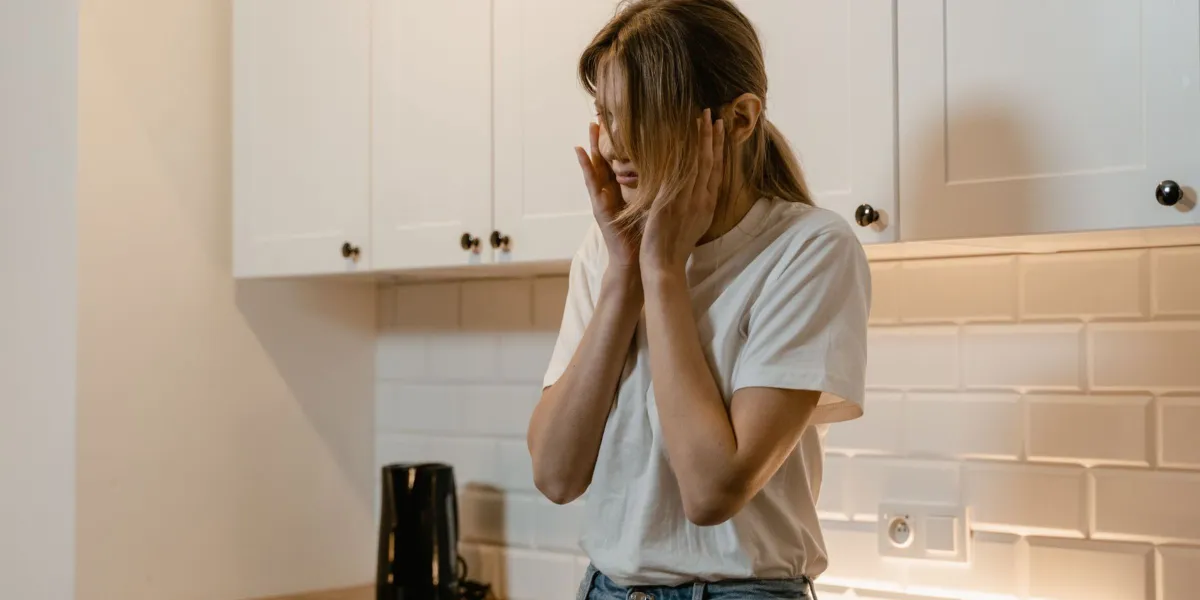
I heard all of it, and the tears came before I could stop them.
After our daughter was born, I had struggled in ways I thought I’d hidden well. The exhaustion that didn’t lift. The afternoons when I just sat in the kitchen and couldn’t make myself start the next task.
I hadn’t asked for help because I genuinely didn’t realize how far under I was.
What I didn’t know was that Mateo’s family had seen it.
Suddenly, every strange coincidence of that year made sense.
I heard all of it, and the tears came before I could stop them.
The pieces of that year started rearranging themselves in my memory.
His mother had started showing up with groceries, always with some cheerful explanation about buying too much at the market.
His aunt had offered to take the baby on Sunday afternoons with such casual ease that I had accepted without thinking about it twice.
His father had quietly paid a repair bill when our water heater failed in January, and Mateo and I were trying to figure out how to cover it.
They had woven a safety net without any noise.
Pieces of that year started rearranging themselves in my memory.
His sister had stocked our freezer with meals and never once brought it up again.
None of them wanted credit. And Mateo had never said a word.
Not because there was something to hide. Because he knew me well enough to know that if I found out, I would spend years feeling like I had been a burden.
He had protected my dignity by keeping it quiet, and his family had let him.
It was time to break my silence right now.
Mateo had never said a word.
***
I stood in that hallway holding a stack of dessert plates, and I felt something crack open in the center of my chest.
I was not going to cry in this hallway.
So I took a breath and walked through the door.
Mateo’s parents looked up.
They had the particular expression of people who have just been caught not doing something wrong, but doing something private. His mother straightened immediately. His father cleared his throat. The silence between us lasted about four full seconds.
I was not going to cry in this hallway.
I took a deep breath and delivered my line, in Spanish: “I understood all of that.”
The silence extended.
My mother-in-law’s hand flew to her mouth.
My father-in-law blinked once, then twice, and then started laughing.
I set the plates down on the side table and looked at them both, and I said the only other thing I had in me.
“Thank you.”
What followed was, by any reasonable measure, chaos.
“I understood all of that.”
His mother burst into tears, which immediately summoned three other women from the dining room who assumed something had gone wrong. When they understood what had actually happened, two of them also started crying.
Mateo came around the corner, holding a serving bowl. He took in the scene and visibly struggled to understand what he had walked into.
“Amy,” he said. “You know Spanish?”
I looked at him and switched back to English because I had used approximately 40 percent of my functional Spanish vocabulary in the last 90 seconds.
I finally had to confess my year-long secret project.
“You know Spanish?”
“I’ve been learning,” I admitted. “For about a year. And I heard your parents just now.”
He set the bowl down very carefully.
Later, when the guests had gone, and the kitchen was cleaned and our daughter was asleep, Mateo and I sat at the table together with the last of the wine.
I asked him why he had never told me.
He was quiet for a moment.
“I heard your parents just now.”
“You were working so hard to hold everything together,” he said finally. “I watched you every day fighting to stay above water. And you were doing it. You were actually doing it.” He turned the glass in his hands. “If I told you my family had been quietly filling in the gaps, the first thing you would have done was feel embarrassed. Then you would have spent the next two years trying to pay it back somehow.”
His explanation proved just how deeply he loved me.
I didn’t say anything because he was right.
Mateo knew me completely.
“The first thing you would have done was feel embarrassed.”
“None of them helped because they were keeping score,” he added. “They helped because you are family. And family doesn’t hand you a bill afterward.”
I sat with that for a long moment. Outside, the neighborhood was quiet. The table was scattered with the comfortable debris of a good evening: a folded napkin, a few crumbs, and the remains of his mother’s flan.
I had spent a year learning a language because I wanted to stop feeling like an outsider. Because I was tired of arriving late to the punchline, of living inside the translated version of things.
“They helped because you are family.”
I had wanted to earn my place in those conversations.
I had been in them all along.
A few weeks later, another Sunday dinner arrived.
This one was smaller. Just Mateo’s parents and his sister and her family.
I had wanted to earn my place in those conversations.
I helped his mother in the kitchen and we talked while we cooked, with her gently correcting my verb tenses and me mispronouncing something that made her daughter laugh so hard she had to sit down.
I laughed too.
At the table, the conversation moved the way it always did, drifting back and forth between English and Spanish the way rivers do when they have room.
But this time, I didn’t wait for the translation. I asked questions when I lost the thread. I answered when something was directed at me. I made a joke that landed about three seconds late, and when everyone caught up to it, the table went loud in the best way.
This time, I didn’t wait for the translation.
I finally knew exactly what true belonging felt like. I was inside the circle.
Not perfectly. Not without effort. But inside, which is the only thing that matters.
Later, helping clear the table, Mateo’s mother squeezed my hand and said something in Spanish I had to ask her to repeat. She said it again, slower, watching my face until I understood.
“You have always belonged here, Amy.”
I nodded. I couldn’t quite speak.
The language was a door. But the family had already left it open.
I was home, and I finally understood every word.
I finally knew exactly what true belonging felt like.