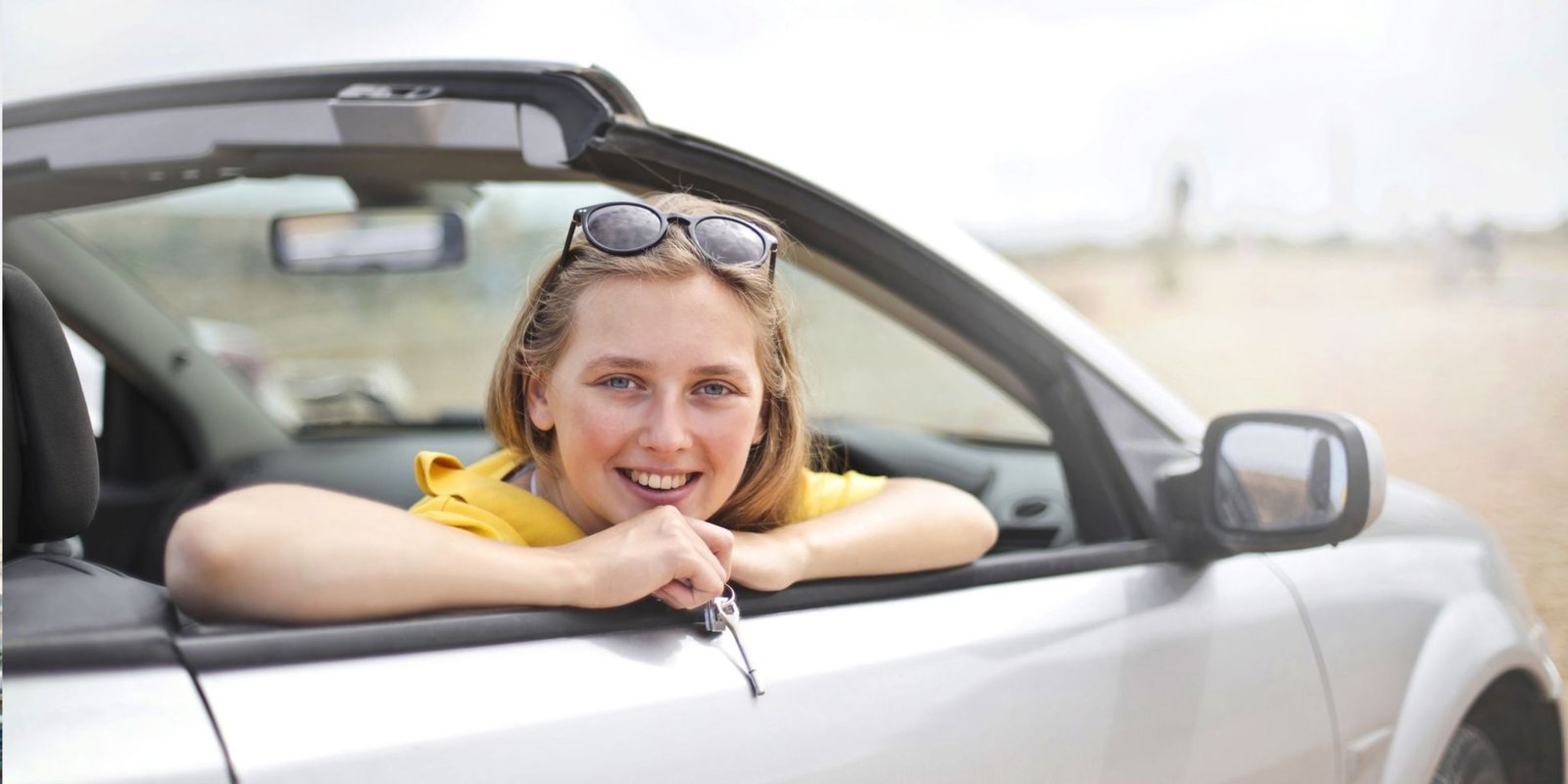
I thought buying my daughter her first car would be one of those memories we’d both keep forever. Then I overheard what she was telling her friends about me.
My daughter, Stacy, is 15, and lately I’ve started feeling like I’m raising two completely different people.
At home, she’s still my girl. She’ll crawl onto my bed at night to show me some stupid video, steal fries off my plate, ask what I think she should wear, and occasionally even hug me without making me beg for it first.
But around other people, especially her friends, something changes.
Over the last year or two, she’s become obsessed with short videos, influencers, brands, what everybody at school owns, and whether something is “embarrassing.”
Normal sneakers aren’t good enough because somebody else has expensive ones.
Our vacations aren’t interesting unless the hotel looks good enough to post.
Once, she asked me not to pick her up directly in front of school because my car was “giving soccer mom.”
I laughed.
Looking back, maybe I shouldn’t have.
The truth is, I’ve probably contributed to this more than I want to admit.
I grew up with almost nothing.
My parents worked constantly, and there were years when I knew better than to ask for new shoes because I could see my mother calculating grocery prices in her head.
So when I had Stacy, I promised myself she wouldn’t feel like that.
If her classmates had something nice and I could reasonably afford it, I usually found a way.
Not because she demanded everything, but because I remembered exactly what it felt like to be the kid always explaining why she didn’t have something.
Which brings me to the car.
Stacy turns 16 soon, and for almost a year, my husband, Dorian, and I had quietly been putting money aside for her first car.
She knew she’d probably get a car eventually.
But she had no idea we were seriously planning to give her one for her birthday.
And I’ll admit something that sounds ridiculous now.
I had actually been looking at a used Tesla.
Not brand new. Nothing insane. But a nice, safe used one that I knew she would lose her mind over.
I pictured putting a giant bow on it in the driveway.
I pictured her screaming, taking a hundred pictures, and hugging me.
I wanted that moment.
Then, about three weeks before her birthday, I went to pick her up from school.
It was ridiculously hot that afternoon, so I had my windows down while I crawled through the pickup line.
I spotted Stacy near the curb with three girls from her grade.
She had her back to me.
I wasn’t trying to listen.
Then I heard my own name.
“Yeah, my mom’s getting me a Tesla for my birthday.”
I slowed down.
One girl said, “Seriously?”
Stacy laughed.
“Obviously. She knows I’ll never drive some ugly starter car.”
For a second, I thought I’d misheard her.
Another girl asked, “How do you even know?”
“Because I told her what I wanted.”
That wasn’t true.
She had mentioned Teslas approximately eight thousand times, but I’d never promised her one.
Then she added, “My mom always caves anyway.”
That one hit me.
The girls laughed.
Stacy kept going.
“She acts like she has rules, but if I want something badly enough, I’ll get it. I’m her only daughter.”
One girl, Taryn, said her parents were making her save for half of her first car.
Stacy made a face.
“No offense, but that’s insane. Why would your parents make you pay for your own birthday present?”
“So I appreciate it?” Taryn said.
Stacy laughed.
“I’d appreciate not having to drive a Corolla.”
I was sitting maybe 20 feet behind her with my hands gripping the steering wheel.
Then she said the part that really did it.
“If my mom got me something like that, I literally wouldn’t drive it to school.”
The girls laughed again.
Stacy finally turned, saw my car, and her entire expression changed.
She waved as if nothing had happened.
Then she climbed in and immediately started telling me about drama involving a girl in science class.
I barely answered.
After a minute, she frowned.
“Why are you being weird?”
“I’m not.”
“You are.”
I almost confronted her right there.
Instead, I asked, “Would you be embarrassed if I bought you a normal first car?”
“What do you mean normal?”
“I don’t know. Something reliable. Used. Nothing fancy.”
She stared at me, then laughed.
“Mom, please don’t scare me like that.”
That answer confirmed everything I’d heard.
That night, after Stacy went upstairs, I told Dorian.
At first, he thought I was reading too much into teenagers bragging around their friends.
I understood.
I was 15 once.
But the more I thought about handing her an expensive car a few weeks later, the worse I felt.
“My mom always caves.”
I couldn’t get it out of my head.
The next morning, I called the dealership.
I changed our plans.
For the next three weeks, Stacy became increasingly excited.
She sent me car videos, asked bizarrely specific questions about charging stations, and casually mentioned which colors she liked.
I confirmed nothing.
Apparently, my silence was confirmation enough.
A few days before her birthday, I overheard her talking to someone upstairs.
“I think it’s white, but I’m hoping she got black interior.”
That was the moment I stopped feeling guilty.
On her birthday morning, Stacy came downstairs in pajamas and immediately looked through the front window.
Then at me.
“Where is it?”
“Where’s what?”
She smiled. “Mom.”
Dorian stood behind the kitchen counter, suddenly fascinated by his coffee.
I wished her a happy birthday and handed her a wrapped box about the size of a shoebox.
Her smile faltered.
“What’s this?”
“Your birthday present.”
She sat at the table and ripped off the paper.
I could see her trying to convince herself there was a car key inside.
Technically, she was right.
She lifted the lid and moved the tissue paper.
All the color drained from her face.
There was a plain car key and a folded card.
She picked up the key first.
“What is this?”
“Read the card.”
She unfolded it.
I’d written one sentence.
“You never have to impress people by pretending a gift is something you’re owed.”
Her eyes snapped toward me.
For several seconds, nobody spoke.
Then she looked at the key again.
“Where’s the other key?”
“There isn’t another key.”
Her voice went quieter.
“Where’s the Tesla?”
“There isn’t one.”
I nodded toward the driveway.
She rushed to the window.
Parked partly behind Dorian’s car was a used silver compact sedan. Safe, clean, reliable, and completely ordinary.
Stacy stared at it.
“You bought me that?”
“We bought you a car.”
“But I already told everyone.”
“I know.”
She turned slowly.
“What do you mean, you know?”
So I told her.
The pickup line. The open windows. The conversation.
Then I repeated the sentence I hadn’t been able to forget.
“My mom always caves.”
Stacy’s face turned bright red.
“You were listening to us?”
“I was 20 feet away with the windows open.”
“That was a private conversation.”
“You were standing beside the school.”
“I was joking!”
“Were you?”
She opened her mouth.
Nothing came out.
Then she pointed toward the driveway.
“So you purposely bought me the ugliest car you could find to embarrass me?”
“No. We bought you a safe, reliable first car.”
“You knew I wouldn’t want that.”
“I knew you expected something else.”
“Because you basically told me I was getting it!”
“I never told you that once.”
“You knew what I wanted!”
That was when Dorian quietly slid a folder across the counter.
Stacy looked at him, then at me.
“What’s that?”
“Open it,” I said.
Inside was the information from the dealership for the used Tesla I’d been considering.
The color she wanted.
The mileage.
Everything.
Stacy stopped breathing for a second.
“You were actually buying it?”
“Yes.”
Her eyes filled immediately.
“Then why didn’t you?”
“I wanted to give you that car because I loved you. Then I heard you telling your friends I’d give it to you because you knew how to make me cave.”
She looked down at the papers.
“I didn’t mean it like that.”
“How did you mean it?”
She had no answer.
Finally, she shoved the folder away.
“I’m not driving that car to school.”
“Okay.”
That clearly wasn’t the response she’d expected.
“What?”
“You don’t have to drive it.”
“So what am I supposed to drive?”
“You can keep getting rides with us.”
Her mouth fell open.
“If you don’t want the car, that’s your decision. But there isn’t another one coming.”
She stormed upstairs.
I thought that was the end of the birthday confrontation.
It wasn’t.
About an hour later, I found her sitting on the floor beside her bed, crying.
I expected her to start arguing about the Tesla again.
Instead, she said, “Please don’t tell anybody.”
“Tell anybody what?”
“That you heard me.”
Something about the panic in her voice stopped me.
“Why?”
“Because they’ll know.”
“Know what?”
She wiped her face.
“That I lied.”
I sat down.
“About the Tesla?”
She didn’t answer.
“Stacy?”
“Not just that.”
The next 20 minutes changed how I understood the last two years.
It started small.
She’d implied that we’d stayed in a more expensive room on one vacation because that was the part of the hotel she’d photographed.
She’d let friends believe a designer jacket she’d borrowed from her cousin was hers.
She’d exaggerated how much certain things cost.
When I refused to buy something, she’d sometimes tell her friends I’d already ordered it.
And the Tesla?
She’d been talking about it for months as though it were guaranteed.
“Why?” I asked.
“You don’t understand.”
“Then make me understand.”
She resisted until I asked to see the group messages she kept referring to.
She handed me her phone.
Nobody was threatening her.
Nobody was running some elaborate campaign against her.
It was almost worse because of how ordinary it was.
A girl named Brielle made little comments about people’s clothes, houses, phones, vacations.
Someone wore the same expensive-looking sweater twice in one week, and there were jokes.
A boy’s family stayed at a budget motel during a trip, and somebody posted about it.
Another girl’s old phone had become a running joke.
Most of it could be dismissed as stupid teenage teasing.
Except Stacy was living inside it every day.
“If they think you have nice stuff,” she said quietly, “they don’t do it to you.”
Suddenly, I remembered my “soccer mom” car.
The hotel pictures.
The sneakers.
Every time Stacy had acted horrified by something perfectly normal.
I’d thought she was becoming shallow.
Some of it was shallowness.
But under it was fear.
“Is that why you said those things about me?”
She looked down.
“I don’t know.”
“That’s not an answer.”
Her face crumpled again.
“It sounds better if your parents just get you whatever you want.”
“Better to whom?”
“My friends.”
“And making me sound like an idiot you can manipulate makes you look better?”
She flinched.
That was the question she couldn’t hide from.
Finally, she whispered, “It makes it sound like I have control.”
That hurt more than the car conversation.
I sat there for a long time.
Then I told Stacy something I’d never told her.
When I was 15, I used to lie too.
Not about cars. We didn’t have enough money for me to make lies that ambitious.
I lied about where my clothes came from.
Once, when my aunt gave me a nice jacket, I let girls at school believe my mother had bought it at an expensive department store.
And once, before a school event, I asked my mother to drop me two blocks away because I didn’t want anyone seeing our old car.
Stacy looked up.
“You did?”
“Yes.”
I could still remember my mother’s face when I’d asked.
And suddenly I remembered Stacy telling me not to pick her up directly in front of school.
I had laughed because I thought it was harmless teenage embarrassment.
Maybe she and I weren’t as different as I’d thought.
“When you were born,” I told her, “I promised myself you’d never feel like I did.”
She listened.
“If your friends had something and I could afford it, I tried to make sure you didn’t feel left out. I thought I was telling you that you deserved nice things.”
“You did.”
“Maybe. But I think I also taught you that having those things was what kept you from being embarrassed.”
She started crying again.
I reached for her hand.
Understanding why she’d done it didn’t erase what she’d done.
“I know what it’s like to be ashamed of having less,” I said. “But you don’t get to protect yourself by making me look stupid.”
“I know.”
“And I’m not fixing the Tesla story for you.”
Her head lifted.
“What?”
“You told them you’re getting one. You’re going to decide what to tell them.”
“Mom.”
“No. I’m not inventing an excuse.”
For once, I didn’t cave.
A few days later, Stacy began practicing more seriously in the silver car.
She complained about everything.
The upholstery was ugly.
The stereo was ancient.
The color was boring.
But she drove it.
The real test came when she had to face the girls she’d bragged to.
That morning, she stood in the driveway staring at the car.
“Can you just take me?”
“I can.”
She looked surprised.
I wasn’t going to force her.
She stared at my car, then at hers.
Finally, she held out her hand.
“Give me the keys.”
When we reached school, I sat beside her while she pulled into the student drop-off area.
Taryn was near the curb with two of the same girls from that afternoon.
Stacy saw them.
For one second, I thought she might keep driving.
Instead, she pulled over near the curb.
They noticed the car immediately.
One girl looked around behind us.
“Where’s the Tesla?”
Stacy’s face went red.
I stayed quiet.
She could still lie.
She could blame the dealership, invent a delivery delay, say she’d changed her mind.
Instead, she took a breath.
“I wasn’t getting one,” she said. “I just told you guys I was.”
There was a pause.
Brielle laughed.
“Wait, seriously?”
Stacy looked like she wanted the pavement to swallow her.
Then Taryn peered through the window.
“So this one’s yours?”
“Yeah.”
Taryn shrugged.
“Cool. Mine still doesn’t exist because I haven’t saved enough.”
One of the other girls started talking about something that had happened the night before.
And that was it.
Months of anxiety.
Months of pretending.
Months of worrying that one wrong car or hotel or pair of shoes would expose her as someone worth laughing at.
The catastrophe lasted about 30 seconds.
Stacy got out.
Before closing the door, she leaned back inside.
“Bye, Mom.”
“Have a good day.”
She hesitated.
Then she kissed my cheek.
Things didn’t magically change after that.
She’s still a teenager.
She still likes expensive sneakers.
She still sends me pictures of clothes that cost more than clothes have any business costing.
She still complains that the silver car is ugly.
But she got a summer job and started paying for her own gas.
Dorian and I have her contribute a modest amount toward the extra insurance cost too.
More importantly, I changed.
When Stacy tells me everybody has something, I no longer immediately see myself at 15, standing beside my mother while she counted grocery money.
Sometimes I say no.
Sometimes Stacy gets embarrassed.
And I let her survive it.
A few months after her birthday, I walked outside one Saturday and found her washing the silver car.
She had music playing and a bucket beside her.
I leaned against the garage.
“I thought you hated that thing.”
She looked at the car.
“The seats are still ugly.”
“I see.”
“And the color is boring.”
“Tragic.”
She rolled her eyes.
Then she smiled.
“But it’s mine.”
By the time she’d earned her license, she was driving the silver car without being asked. One Monday morning, she drove it to school.
She didn’t park around the corner.
She didn’t ask me to take her instead.
She pulled directly into the student lot, right where everybody could see her.
I had spent most of Stacy’s life believing that good parenting meant making sure my daughter never felt the shame I’d felt growing up.
It took an ugly starter car to make me understand how wrong I’d been.
I couldn’t buy enough things to make Stacy immune to other people’s judgment.
All I could do was teach her that she could survive it.
And maybe, eventually, stop believing she had anything to be ashamed of in the first place.