Grief had already made the afternoon difficult enough. Then Katherine noticed a weathered gravestone bearing information no stranger should have shared with her.
My name is Katherine, and I’m 28. I grew up in one of the wealthiest families in our state, surrounded by expectations I never once fit into comfortably.
I loved animals more than etiquette lessons.
I wanted to become a veterinarian instead of learning which fork belonged with which course.
I hated galas, business dinners, and my parents’ polished friends, who looked at me like I was some expensive object that had come out slightly defective.
Eventually, I became a veterinarian anyway, against my father’s very clear wishes, and built a life mostly separate from the world I’d grown up inside.
I thought that was the biggest fight I would ever have with my family.
Last week, my close friend Albert died suddenly in a car accident.
For days, I kept reaching for my phone to send him things before remembering he would never answer again.
At his funeral, I stayed until almost everyone had left.
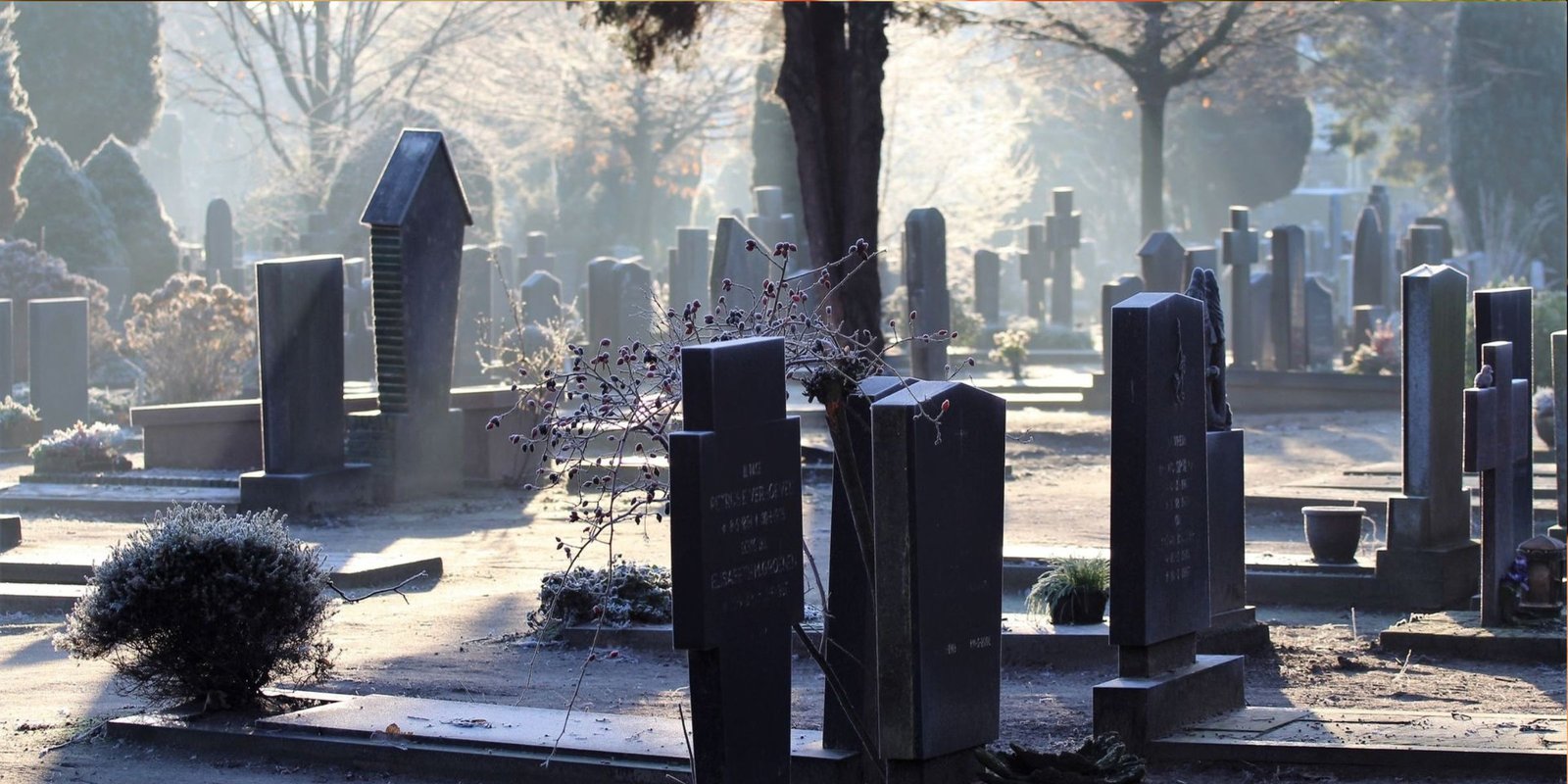
When I finally walked away from the burial site, I took a path through an older section of the cemetery because I couldn’t bring myself to return to the crowd near the parking lot.
Most of the stones there were weathered, their lettering softened by decades of rain.
One headstone stopped me cold.
Katherine.
My last name.
My exact birth date.
For several seconds, I couldn’t make sense of what I was seeing.
Then my eyes dropped to the second date.
Three days after I was born.
I stared at the stone until the numbers blurred.
I took a photograph with shaking hands.
I didn’t know why.
Maybe because some part of me believed the stone would disappear the moment I turned away.
Then I got into my car and drove straight downtown to my father’s office.
I didn’t call ahead.
I walked past his assistant despite her startled attempt to stop me and pushed open his office door.
My father was in the middle of a board meeting.
Directors, partners, and shareholders sat around the long table while a quarterly report glowed on the screen behind him.
Every head turned toward me.
I crossed the room, put my phone on the table in front of my father, and enlarged the photograph.
“What does this mean?!” I shouted.
My father’s face went completely still.
That frightened me more than confusion would have.
He recognized it.
My father glanced around the room. “Everyone out.”
Nobody argued.
Chairs scraped against the floor. Papers were gathered. The door closed one person at a time until only my father and I remained.
He kept looking at the photograph.
“That isn’t your grave,” he said.
“Then why is my name on it?”
He rubbed his forehead.
“Answer me.”
He looked older than he had 10 minutes earlier.
“You weren’t born alone.”
I stared at him.
“What?”
“You had a twin sister.”
For a moment, I thought I had misheard him.
“I had a what?”
“A sister. A twin.”
I laughed once, but there was nothing funny in it.
“I’ve been alive for 28 years, and you’re telling me now that I had a twin?”
“She died three days after you were born.”
My eyes moved back to the photograph.
The dates.
The same birthday.
Three days.
Something inside me seemed to tilt.
“So that’s her grave?”
“Yes.”
“Why does it have my name?”
He didn’t answer.
I felt anger replacing shock.
“Was she named after me?”
“No.”
The word came too quickly.
I stared at him.
My father stood and walked toward the windows.
“Dad.”
He kept his back to me.
“The baby buried there was Katherine.”
The room seemed to go silent in a different way.
“I don’t understand.”
“You had another name when you were born.”
I couldn’t speak.
He turned around.
“Your sister’s legal first name was Katherine. Joanne was her middle name. We planned to call her Joanne because your mother liked it, but Katherine was the name on her records. After she died…”
He stopped.
“After she died what?”
“We need to talk to your mother.”
“No. You’re going to talk to me.”
“Katherine.”
“Apparently I don’t even know if that’s my name, so don’t use it to shut me up.”
That finally broke something in his expression.
He sank into a chair.
“You were given a different first name at birth. After Joanne died, your mother started calling you Katherine.”
I stared at him.
“By accident?”
“At first.”
“And then?”
He said nothing.
I picked up my phone.
“Then I’m going to Mom.”
He stood. “I’ll come with you.”
“No.”
For once, he didn’t try to stop me.
My mother was home when I arrived.
She was sitting in the conservatory with paperwork from one of the charitable foundations she managed. When she saw my face, she immediately stood.
“What happened?”
I put the cemetery photograph in front of her.
Her hand flew to her mouth.
That was all the confirmation I needed.
“Tell me about Joanne.”
My mother sat down slowly.
I remained standing.
She told me the story in pieces.
We had been born several weeks early.
I was small but stable.
Joanne had trouble breathing almost immediately.
She spent most of those three days surrounded by machines while my mother went back and forth between us in the neonatal unit, terrified that one daughter was dying while the other needed her.
Joanne died before dawn on the third day.
My mother cried as she described it, but I couldn’t comfort her. There were too many questions between us.
“What was my name?”
She hesitated.
I repeated the question.
She told me.
It sounded completely foreign.
“And after she died, you just decided I was Katherine?”
“No.”
“That’s exactly what Dad said.”
“It wasn’t a decision.” She pressed both hands together. “Not at first.”
She told me that after the funeral, she had been feeding me one night and called me Katherine without realizing it.
Then she did it again the next morning.
My father corrected her.
She cried for hours.
After that, he stopped correcting her.
Within weeks, everyone in the house was calling me Katherine.
“Why?”
My voice cracked.
My mother looked at me helplessly.
“I couldn’t bear hearing her name and knowing there would never be anyone answering to it again.”
I recoiled.
“So you made me answer to it.”
“You were still my daughter.”
“Which daughter?”
Her face collapsed.
“You were never a replacement.”
“Then why did you replace my name?”
She had no answer.
Months later, my parents formally changed my first name.
They never told me.
They never told anyone who entered my life later. My school records said Katherine. My medical records eventually said Katherine. Every photograph, birthday card, certificate, and diploma I owned belonged to Katherine.
The person I had been for the first few months of my life had simply disappeared.
I left before either of us said something we couldn’t take back.
For the next two days, I barely slept.
I kept thinking about the grave.
But another thought began bothering me even more.
If the secret had only been about my name, why had my father’s expression looked so ashamed?
I went back to my parents’ house while they were attending a dinner.
There was an upstairs storage room my mother had used for decades.
I remembered seeing old baby albums there when I was a teenager, but I’d never gone through the cabinets at the back of the room.
I opened one and started moving aside old photo albums and folders.
Behind them, pushed against the back wall, I found two small boxes.
One was labeled “Katherine.”
The other carried the name I’d been given at birth.
The second box was almost empty.
A hospital bracelet.
A birth announcement that had never been mailed.
A baby book with three pages completed.
Then nothing.
The “Katherine” box was overflowing.
Photographs. Cards. Clothing. Letters.
Some of the letters were dated before Joanne died.
Others were written afterward.
Most were from my mother.
At first, I felt sick reading them.
The later ones were private words from a grieving woman to the child she’d buried.
Then I reached a letter written six months after our birth.
My mother had described the daughter she imagined Joanne might have become.
She wrote about piano lessons.
Formal dances.
Summer charity events.
Learning to host dinners.
Working with the family foundation someday.
She imagined a poised young woman who loved beautiful dresses, understood their social world, and carried the family name effortlessly.
I read the letter twice.
Then a third time.
Because I knew that girl.
I had spent my entire childhood being told to become her.
Piano lessons I begged to quit.
Etiquette classes I hated.
Formal events where my mother corrected my posture.
Summer programs connected to the family foundation when all I wanted was to volunteer at an animal shelter.
Suddenly, memories I’d dismissed as normal pressure from wealthy parents changed shape.
My mother hadn’t discovered who I was and hoped to refine me.
She had written the role before I could speak.
I took photographs of the letters and waited for my parents to come home.
My father arrived first.
I was sitting at the dining-room table with the boxes open.
He stopped in the doorway.
“You went through your mother’s things.”
“They’re my things too.”
“Katherine.”
I held up the letter.
“She wrote this before I could walk.”
He didn’t respond.
“Piano. Galas. The foundation. All of it.”
“Your mother had expectations. Parents do.”
“Don’t do that.”
His jaw tightened.
“Don’t make this sound ordinary.”
I pulled another paper from the box. It was an old schedule from when I was 11.
Piano practice.
Junior charity committee.
Etiquette tutoring.
Formal dance lessons.
I laid it beside my mother’s letter.
“They’re almost identical.”
He looked at them.
“I didn’t know about every letter.”
“But you knew.”
His silence answered me.
I stood.
“When?”
He stared at the table.
“When did you realize she was raising me according to the life she’d imagined for Joanne?”
“You were young.”
“How young?”
“Maybe seven.”
I actually laughed.
“You knew when I was seven?”
“Your mother was grieving.”
“For 28 years?”
“It wasn’t that simple.”
“No, Dad. I think it’s exactly that simple.”
His voice rose. “You think I didn’t see what losing a child did to her?”
“And what did keeping me do?”
He stopped.
I could hear my own breathing.
“You knew Mom couldn’t separate me from Joanne, and instead of helping her, you helped her do it.”
“I was trying to keep this family together.”
“You were trying to keep her together.”
He looked away.
“And every time I didn’t behave like the daughter she’d imagined,” I continued, “you pushed harder.”
“That’s not fair.”
“Veterinary school.”
He flinched.
That told me everything.
“You said I was walking away from everything meant for me.”
“I wanted you to have opportunities.”
“No. You wanted me to accept a future someone had invented before I had one.”
He had nothing to say.
I looked at the letters scattered across the table.
Then the sentence came to me so clearly that I almost whispered it.
“You didn’t just give me her name.”
My father looked at me.
“You gave me her future.”
My mother came in before he could answer.
She saw the boxes.
Then she saw my face.
For the first time in my life, neither parent tried to control the conversation.
I told them what I remembered.
Being 12 and crying in the bathroom before a formal dinner.
Being 16 and begging to spend a summer assisting at an animal clinic instead of joining a foundation program.
Being 18 and announcing I wanted to study veterinary medicine.
My father’s fury.
My mother’s disappointment.
Every moment I’d wondered why being myself seemed to hurt them.
“I spent my whole life thinking there was something wrong with me. I thought I embarrassed you because I wasn’t elegant enough or social enough or interested in the right things.”
My mother was crying.
“I loved you.”
“I know.”
And I did.
That was what made it harder.
“You loved me,” I said, “but did either of you ever ask who I was before deciding who I was supposed to become?”
Neither answered.
My father finally said, “We gave you every opportunity.”
“An opportunity isn’t a gift if I’m only allowed to accept it by becoming someone else.”
My mother covered her face.
I looked at both of them.
“Joanne died three days after we were born. You couldn’t give her a life, so you tried to give her mine.”
My mother lowered her hands.
For a long time, nobody spoke.
Then she said something I had never expected.
“You’re right.”
My father looked at her.
She shook her head.
“Don’t defend me.”
She turned to me.
“I told myself you weren’t replacing her because I knew you were a different baby. I knew it logically. But calling you Katherine made losing her feel less final.”
Her voice broke.
“Then you grew, and every time you became more yourself, part of me felt like I was losing something again. I didn’t realize how much I was asking you to carry.”
“You should have.”
“I should have.”
My father sat down.
He looked defeated.
“I should have stopped it,” he said.
“Yes.”
No comforting answer came after that.
I told them what would change.
My career was no longer open for discussion.
Neither of them would pressure me about business events, foundation work, marriage, social obligations, or what someone with my background was “supposed” to do.
If they wanted a relationship with me, it would be with the person I actually was.
My mother nodded.
Then she asked quietly, “Are you going to change your name?”
I had been wondering the same thing.
Three days earlier, I might have said yes just to prove I could.
But standing there, I realized something.
My parents had given me Katherine for the wrong reason.
But they hadn’t lived with it for 28 years.
I had.
Katherine had graduated from veterinary school.
Katherine had built a clinic career she loved.
Katherine had held frightened dogs while their owners cried.
Katherine had argued with her father and chosen her own life anyway.
Katherine had been Joanne’s name first.
But it no longer belonged only to her.
“No.”
My mother looked surprised.
“I’m keeping it.”
A week later, I returned to the cemetery alone.
Albert’s grave was still covered with fresh flowers.
I stood there first and told him, quietly, that his funeral had somehow cracked my entire life open.
Then I walked to the older section.
The stone was exactly where I’d found it.
Katherine.
My last name.
Our birth date.
Three days later, the date my sister died.
I carried a small ceramic dog from my office, something Albert had once jokingly given me after telling me my entire personality could be reduced to “animals and stubbornness.”
I placed it beside the stone.
Not because Joanne had loved animals.
I had no idea what Joanne would have loved.
Maybe she would have adored formal dinners.
Maybe she would have hated them more than I did.
Maybe she would have become a musician, an accountant, a teacher, or someone who wanted nothing to do with our family’s world.
She had been alive for three days.
Nobody had the right to invent the rest.
Especially not me.
I touched the top of the stone.
“You were my sister,” I said. “And you were not me.”
For most of my life, I’d thought my parents’ disappointment proved I had failed to become the woman I was supposed to be.
Standing beside Joanne’s grave, I finally understood the opposite.
I had spent 28 years becoming myself despite being handed someone else’s name, someone else’s imagined future, and expectations that had existed before I was old enough to choose anything.
There had never been anything wrong with the life I chose.
It was simply mine.