A year after my husband was declared dead at sea, my sister announced she was getting married to a man she refused to show me. The night before the ceremony, she left something behind at my house, and returning it forced me to question everything I thought I knew about my husband’s death.
My husband died in a storm, and for a year, I believed the ocean had taken everything from me.
Then my sister left her passport on my kitchen table the night before her wedding.
When I returned it, the man who opened her apartment door had Paul’s face.
They never found his body.
Paul had been presumed dead after his fishing boat caught fire during a storm. Rescuers found pieces of the hull, his scorched wallet inside a floating compartment, and his wedding ring beneath the damaged console.
They never found his body.
For months, I barely left my bedroom. I slept in Paul’s old T-shirts because they still smelled like him. I kept his coffee mug beside the sink and his shoes near the back door.
One evening, she opened my curtains.
My younger sister, Diane, was the only person who stayed close.
She brought groceries, answered calls, and sat beside me when I had nothing to say.
One evening, she opened my curtains.
“You can’t spend the rest of your life waiting for a dead man to come home,” she said gently.
“I know he’s dead.”
“Then why do you still listen for his truck?”
A year after the accident, Diane suddenly announced that she was getting married.
“I don’t know.”
A year after the accident, Diane suddenly announced that she was getting married.
“You never told me you were seeing anyone.”
“It happened quickly.”
“Who is he?”
She wouldn’t show me a picture.
“His name is Evan. He’s shy and doesn’t like attention.”
She wouldn’t show me a picture. She said they wanted a private ceremony and planned to move to another state immediately afterward.
“You aren’t inviting me?”
“I don’t want the wedding to be painful for you.”
“Why would it be painful?”
People only had to mention Paul, and I stopped asking questions.
She hesitated.
“Because Paul should be here.”
The explanation hurt, but grief had made me easy to manage. People only had to mention Paul, and I stopped asking questions.
The night before the ceremony, Diane visited with documents for the move. Evan called, and she rushed out, leaving her passport on my kitchen table. She used it as her identification and needed it for their flight.
When the door opened, the passport slipped from my hand.
I called six times.
No answer.
I drove to her apartment. I did not want her wedding or move ruined.
When the door opened, the passport slipped from my hand.
The man standing there had Paul’s face.
“I’m not Paul. You’ve got the wrong apartment.”
The same gray eyes. The same crooked nose. Even the small burn mark near his wrist that I believed came from our first Thanksgiving together.
“Paul?” I whispered.
He went still.
“I’m not Paul. You’ve got the wrong apartment. I don’t know you,” he said, trying to close the door.
Then I started sobbing.
I blocked it.
“Please.”
Then I started sobbing.
“You look exactly like my husband. How is this possible?”
“There’s a lot we never told you,” he said. “The truth is worse than you think.”
A neighbor’s door opened, so he stepped aside.
Diane stood beside him at a lakeside restaurant.
Inside were two suitcases, airline tickets, and wedding invitations. A framed photograph lay facedown on the counter.
Diane stood beside him at a lakeside restaurant. He had Paul’s face, but his smile was different. Paul smiled as though he was suppressing laughter. This man looked cautious.
“My name is Evan,” he said.
“Who are you?”
“Paul’s brother.”
“Paul didn’t have a brother.”
“He had a twin.”
The apartment door opened. Diane hurried inside, saw me, and stopped.
“No.”
Paul had disappeared twelve months earlier.
“How long have you known him?”
“Fourteen months.”
Paul had disappeared twelve months earlier.
I looked at Evan.
“Were you on the boat?”
Evan said he and Paul had been separated when they were nine.
His silence answered me.
“There were two of us,” he said. “Paul invited me.”
I sat on the couch.
Evan said he and Paul had been separated when they were nine. Their mother died, and their father could no longer care for them. Paul went to an aunt. Evan went to an uncle several hundred miles away.
“Paul told me everything.”
They wrote letters until their relatives began fighting over money and blame. When Paul was sixteen, he stopped answering.
“I tried to find him as an adult,” Evan said. “He refused contact.”
“Paul told me everything.”
“No. He told you everything he could live with.”
I pointed toward his wrist.
Paul invented that story after I asked about it in front of friends.
“What about the burn?”
“We got those when we were eight. A hot tray started falling, and we both grabbed it.”
The scar had never come from our first Thanksgiving. Paul invented that story after I asked about it in front of friends.
That lie frightened me more than the twin. Paul had practiced removing Evan from his life.
Diane stepped closer.
“He received a letter from Evan after their father died.”
“Paul contacted me six months before the trip.”
“You knew?”
“He received a letter from Evan after their father died. He wanted help arranging a meeting.”
“Why didn’t he ask me?”
“He wanted to surprise you after they worked things out.”
Then the brothers began talking.
Paul imagined bringing Evan home and asking whether I could tell them apart.
Then the brothers began talking.
Some calls went well. Others ended in arguments. Evan wanted to know why Paul had abandoned him. Paul wanted to know why Evan stayed with relatives who blamed his side of the family.
Neither admitted they had both been frightened children.
According to Evan, the weather changed faster than forecast.
Finally, Paul invited Evan fishing. He thought being alone would force them to talk.
“You drove Evan to the marina,” I said.
Diane nodded.
“That was the first time I met him in person.”
According to Evan, the weather changed faster than forecast. The engine failed, fuel leaked, and flames spread across the rear compartment.
Before they lost sight of each other, Paul shoved a sealed, buoyant tackle box toward him.
They entered the water in flotation vests, but the storm separated them.
“Paul kept calling my name,” Evan said. “Then I couldn’t hear him.”
Before they lost sight of each other, Paul shoved a sealed, buoyant tackle box toward him. Evan looped its cord around his vest.
Hours later, he reached a navigation platform. A cargo vessel found him the next morning.
The authorities knew a second man had survived, but Diane told me only that Paul had taken an unfamiliar passenger aboard. She concealed his name and his connection to Paul. After the accident, I was too shattered to ask questions.
“I wanted to tell you.”
She met Evan at a coastal medical center.
“I wanted to tell you,” she said.
“But you didn’t.”
“Evan asked me to wait until Paul was found.”
For several days, they believed Paul might reach shore. Then rescuers recovered his ring and wallet.
Eventually, they stopped planning to tell me.
Evan wanted to meet me. Diane told him to wait until after the memorial, then until I slept normally, then until the holidays passed.
Eventually, they stopped planning to tell me.
“How did this lead to your engagement?”
“There wasn’t one moment,” Diane said.
Evan had been living in their father’s empty house while settling the estate. After the accident, he could not bear to return.
They talked about Paul because nobody else knew both versions of him.
Diane visited because she felt responsible for arranging the meeting. Evan blamed himself for taking the trip. Diane blamed herself for bringing them together.
They talked about Paul because nobody else knew both versions of him.
Evan knew the child.
Diane knew the man.
Evan returned from the bedroom carrying Paul’s metal tackle box.
Their grief became closeness, and closeness became love.
“That wasn’t protection,” I said. “You left me alone with a lie.”
“I know.”
Evan returned from the bedroom carrying Paul’s metal tackle box. One corner was blackened, and the latch was bent.
Inside was a photograph of two identical boys holding wooden boats. There was also a sealed letter with my name on it inside a waterproof pouch.
I took the box and left.
“You had this for a year?”
“We kept waiting for the right moment,” Diane said.
“There was no right moment because you were cowards.”
Neither argued.
I took the box and left.
When I tore the envelope, his handwriting made my chest ache.
At home, I sat in my driveway with Paul’s letter unopened in my lap.
When I tore the envelope, his handwriting made my chest ache.
Paul wrote that he had spent years pretending he stopped answering Evan because their relatives made communication impossible.
The truth was uglier.
Paul had been offered a stable home, new friends, and a future. Evan reminded him of everything that came before it, so Paul pushed him away.
Meeting Evan again showed him that the brother he resented had been another frightened child.
As the years passed, shame made silence easier.
Meeting Evan again showed him that the brother he resented had been another frightened child.
He planned to bring Evan home after the fishing trip. He had written the letter in case he lost his nerve, intending to give it to me when they returned.
The next morning, I called the harbor office.
The final paragraph read:
“If anything happens before I explain, know that my years with you were the truest part of my life. But please don’t let loving me require you to excuse the things I was afraid to tell you.”
On the back of the photograph, someone had written, “Paul and Evan, age eight. Still impossible to separate.”
The next morning, I called the harbor office.
He remembered them arguing.
I needed proof that did not come from Diane or Evan.
The harbor manager confirmed that two identical men had boarded Paul’s boat. Paul listed only himself because Evan arrived after the paperwork was completed.
He remembered them arguing.
“Evan wanted to cancel because of the weather. Paul insisted they would stay close.”
He also confirmed that Evan was the survivor named in the official report.
I returned to Diane’s apartment shortly before the ceremony.
Evan had told the truth about the storm.
That did not excuse what happened afterward.
I returned to Diane’s apartment shortly before the ceremony.
She wore a simple white dress. Evan stood near the window in a dark suit.
“I cannot control who you marry.”
“You cannot get married today,” I said.
“Are you here to stop us?”
“I cannot control who you marry. But if you leave today, your marriage will begin the way your relationship began: with avoidance, secrets, and someone else carrying the consequences.”
“What do you expect?” Diane asked.
“I can’t marry you today if we don’t know the answer.”
“Cancel the ceremony. Stay here. Help me understand what Paul hid.”
I looked at Evan.
“And you need to know whether she loves you or the part of Paul she thinks she recovered.”
“You don’t get to decide what I feel,” Diane said.
“No, but you don’t get to demand that I bless a marriage built around lying to me.”
After a long silence, Diane called the officiant and postponed the ceremony.
Evan looked at her.
“I can’t marry you today if we don’t know the answer.”
After a long silence, Diane called the officiant and postponed the ceremony.
Over the next several weeks, Evan and I went through Paul’s belongings.
At first, seeing him was unbearable.
Evan hated fishing and had gone only because Paul asked.
Then the differences became clear.
Evan drank tea. Paul drank coffee.
Evan hated fishing and had gone only because Paul asked.
Paul filled silence with jokes. Evan let it remain.
I contacted a member of the cargo crew that rescued Evan.
I showed him a Thanksgiving photograph in which Paul’s scar was visible.
“He wouldn’t release the tackle box,” the man said. “He kept saying, ‘My brother gave me this. I have to bring it home.’”
One afternoon, Evan gave me letters he had written to Paul as a teenager. Most had been returned unopened.
“I don’t need you to defend him,” Evan said. “I only want someone who loved him to know I tried.”
I showed him a Thanksgiving photograph in which Paul’s scar was visible.
Evan laughed.
That was when I stopped seeing him as my husband standing in the wrong room.
“Paul was terrible at lying under pressure.”
His laugh sounded nothing like Paul’s.
That was when I stopped seeing him as my husband standing in the wrong room.
He was Evan.
Diane started counseling and moved into her own apartment. She admitted she had protected herself from my anger and from the possibility that I would demand she leave Evan.
This time, they planned no escape.
Months later, they still wanted to marry.
This time, they planned no escape.
Before the ceremony, we took Paul’s repaired tackle box to the marina. Evan had arranged for a plaque near the dock.
It read, “Two brothers returned to the water together. One came home carrying both their stories.”
Evan brought the childhood photograph. I brought Paul’s letter. Diane brought two wooden boats matching those in the picture.
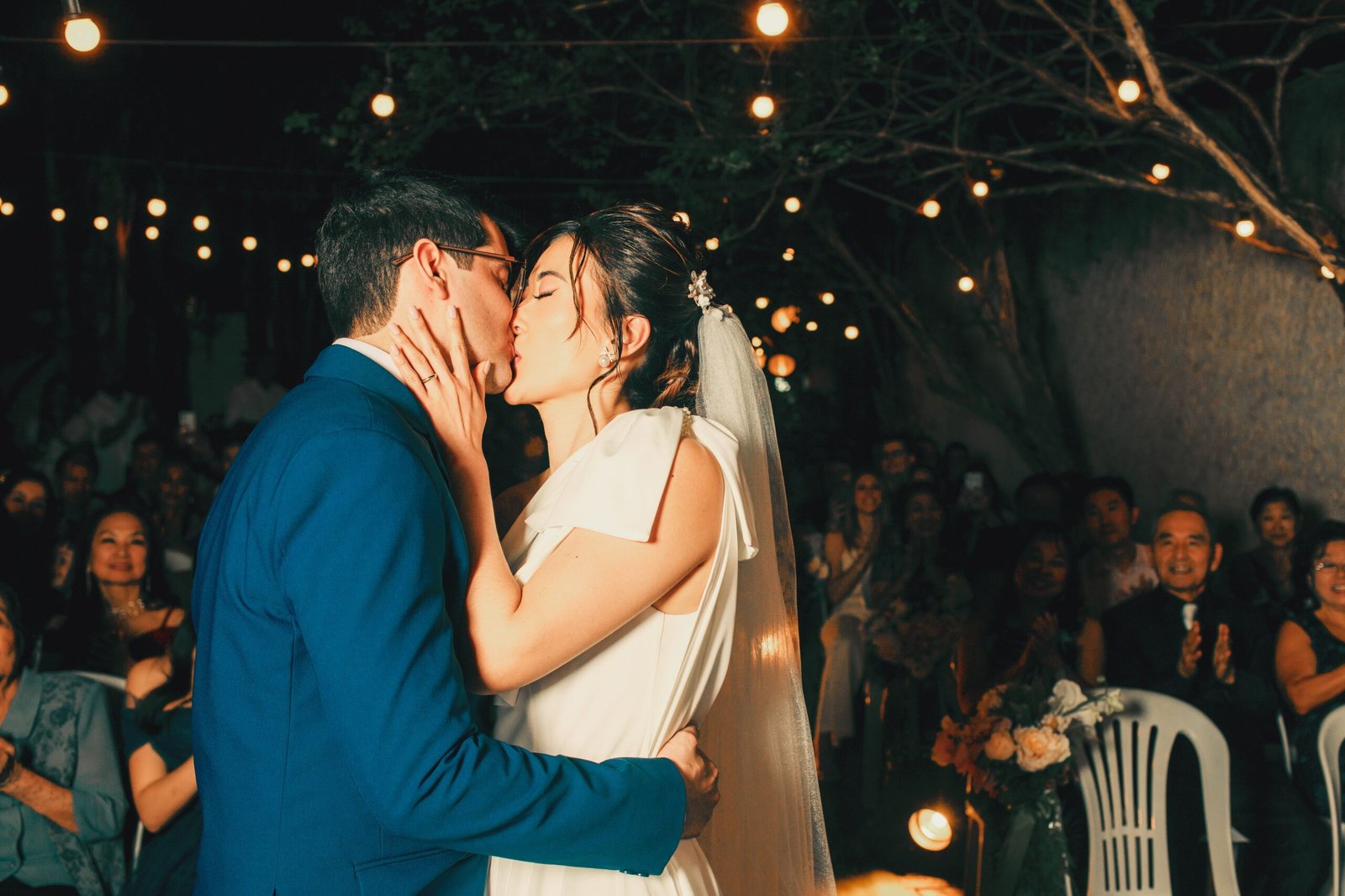
Several weeks later, Diane and Evan married near the lake.
Evan apologized to Paul for losing decades and having only one afternoon with him.
I told Paul I wished he had trusted me with his whole life, not only the parts he believed were easy to love.
Several weeks later, Diane and Evan married near the lake.
I attended, though I did not sit in the front row.
My presence was not forgiveness. It was a decision not to let another secret harden into silence.
Seeing Evan beside her still took my breath away.
Before the ceremony, Evan thanked me for coming. He did not hug me or ask whether I was all right.
Afterward, Diane asked me to join them for a photograph.
Seeing Evan beside her still took my breath away.
Then he turned toward the camera and gave his cautious, uneven smile.
It was not Paul’s smile.
I stepped up beside my sister.
I didn’t hide the box in the attic.
That evening, I went home, opened my bedroom window, and removed Paul’s old T-shirt.
I folded it into the tackle box with his letter and the photograph.
I didn’t hide the box in the attic.
I placed it on the living room shelf.
Paul spent most of his life hiding that photograph because he believed the past could damage the life he had built.
The photograph remains visible.
I will not repeat his choice.
The photograph remains visible.
Two brothers at eight years old.
Their shoulders touch. Each holds a wooden boat.
For the first time, I can look at both faces and know exactly who I am seeing.