When my son laughed at our waiter with Down syndrome, I didn’t yell. I didn’t punish him. I simply took him home and told him a story I’d buried for 20 years—the story of the worst mistake I’d ever made.
Some moments make you proud to be a parent.
Others make you question everything you thought you had taught your child.
The night my 14-year-old son mocked our waiter with Down syndrome, I realized I was looking at a stranger.
Leo is smart, funny, charming when he wants to be, and usually the first person to help our elderly neighbor carry groceries inside.
Or so I believed.
That Friday evening, I took him to his favorite steakhouse to celebrate the best report card he’d ever brought home.
Straight A’s.
His teachers praised his work ethic.
His basketball coach called him a leader.
I’d worked two extra weekend shifts at the hospital to afford dinner there because I wanted him to know I noticed his hard work.
As we walked inside, he grinned.
“Mom, you didn’t have to do this.”
“I wanted to.”
“You know I’m ordering the biggest steak.”
“I figured.”
He laughed.
“Dessert too?”
“We’ll see.”
He wrapped an arm around my shoulders.
“You’re the best.”
Those words made every overtime shift worth it.
We settled into our seats, and for a moment, everything felt perfect.
Then our waiter approached.
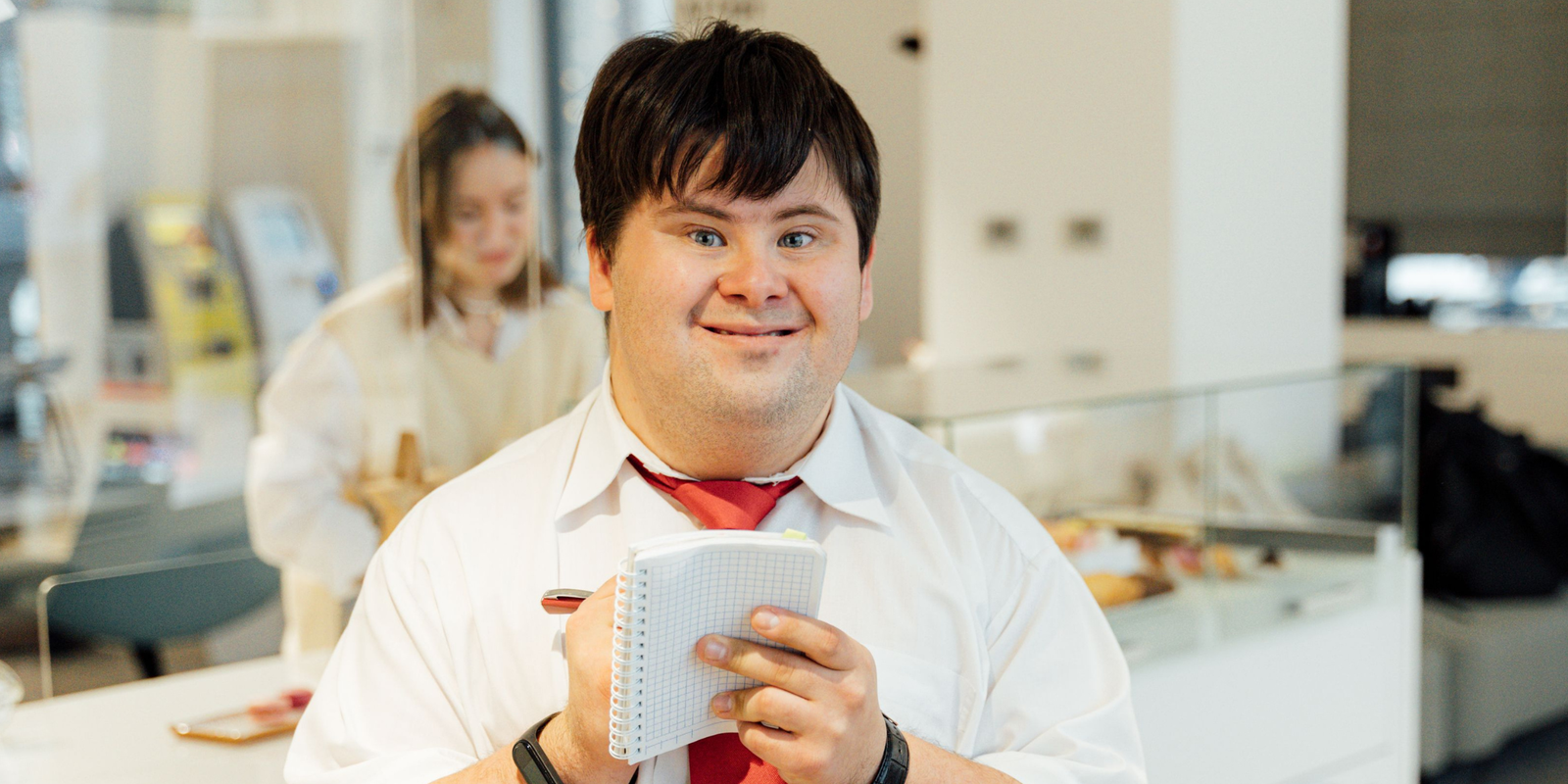
He looked to be in his early 20s.
His name tag read “Sam.”
He wore the same black apron as everyone else, but what stood out wasn’t his uniform.
It was the careful concentration on his face.
He had Down syndrome.
His smile was warm.
His posture was straight.
He held his order pad with both hands like it was something important.
“Good evening,” he said carefully.
“My… my name is Sam. I’ll be taking care of you tonight.”
He smiled apologetically.
“I’m… still learning.”
His words came a little slower than most people’s.
Every sentence was deliberate.
Every syllable mattered.
I smiled.
“Thank you, Sam. It’s nice to meet you.”
His shoulders relaxed.
“It’s… nice to meet you too.”
He looked at Leo.
“And what would you like to drink?”
Leo didn’t answer immediately.
Instead, he glanced at me with the tiniest smirk.
A knot formed in my stomach.
Maybe I imagined it.
Maybe he was distracted.
Sam patiently waited.
“I’ll have a lemonade,” Leo finally said.
Sam carefully wrote it down.
Then he looked at me.
“And for you?”
“Unsweet tea, please.”
He nodded.
“Perfect.”
He repeated both drinks quietly to himself before smiling again.
“I’ll… I’ll be right back.”
As soon as he walked away, Leo let out a soft laugh.
“What?”
I asked.
“Nothing.”
His grin said otherwise.
I leaned closer.
“Knock it off.”
“I didn’t even do anything.”
I held his eyes for another second before letting it go.
Maybe that would be enough.
It wasn’t.
A few minutes later, Sam returned with our drinks.
He carefully placed each glass exactly where it belonged. Then he opened his small notebook.
“Today’s special is…”
He looked down to read.
“…our grilled sir…”
He paused.
“…sirloin.”
He gave a small, self-conscious smile.
“Sorry. I still get stuck on that word.”
“It’s okay,” I said warmly. “You did just fine.”
Before Sam could continue, I heard it.
A snort.
Leo covered his mouth.
His shoulders shook.
My heart dropped.
I kicked him lightly beneath the table.
Hard enough to get his attention.
He looked at me.
Rolled his eyes.
Then looked back at Sam.
“I’m sorry,” Sam said. “I’ll start over.”
“No need,” I replied. “We’re ready.”
I ordered first.
Leo barely looked up from his phone.
“I’ll have the ribeye. Medium.”
Sam carefully repeated everything back.
Then he thanked us and headed toward the kitchen.
The second he disappeared through the swinging doors, Leo unlocked his phone.
His thumbs flew across the screen.
A second later, he laughed.
“What are you doing?”
“Nothing.”
“Leo.”
He sighed dramatically.
“I texted Tyler.”
“What did you say?”
He turned the phone away.
“Nothing.”
“Show me.”
“It’s just a joke.”
“Leo.”
With exaggerated annoyance, he held the screen toward me.
My stomach twisted.
“This waiter is moving in slow motion. I think I’ll be old before my steak gets here.”
Below it was a laughing emoji.
Then another message.
“Pretty sure I could do his job faster.”
I stared at the words.
Then back at my son.
“Delete that.”
“Oh, come on.”
“Delete it.”
“It’s funny.”
“No.”
“It’s cruel.”
He shrugged.
“He’s never going to see it.”
“That doesn’t make it okay.”
Leo leaned back.
“Mom, everybody jokes about people.”
“Not like this.”
“It’s not that serious.”
Before I could answer, Sam returned carrying a basket of warm bread.
He smiled as he placed it on the table.
“I hope… you enjoy.”
Leo waited until Sam turned away.
Then he exaggerated the careful way Sam walked.
Shoulders stiff.
Steps slow.
Head tilted.
He whispered, “I hope… you enjoy.”
Then he snickered.
I froze.
The couple at the next table had seen it.
The older woman looked horrified.
Her husband shook his head.
Across the aisle, another family had gone completely silent.
Nobody laughed, nobody smiled.
Only Leo.
He looked around as though he expected everyone else to find him hilarious.
Instead, the room seemed suddenly smaller.
Colder.
I felt heat rush into my face.
Not anger.
Shame.
Deep, overwhelming shame.
I looked toward the kitchen.
Sam hadn’t seen it.
At least I hoped he hadn’t.
I reached into my purse.
Pulled out my wallet and placed my credit card on the table.
When Sam returned a few minutes later, I stopped him before he could speak.
“I’m so sorry.”
He looked confused.
“For what?”
I glanced toward Leo.
Then back at Sam.
“For how my son behaved.”
Sam blinked.
“Oh.” His smile faded slightly. “I… didn’t…”
He hesitated.
“I didn’t know if… maybe…”
He never finished the sentence.
That hurt even more.
He had noticed.
He’d simply chosen to pretend he hadn’t.
“I’m very sorry,” I repeated. “You deserved better.”
His smile returned.
Small.
Gentle.
“It’s okay.”
“No,” I said quietly. “It isn’t.”
I pushed my credit card toward him.
“We’re going to leave.”
His eyes widened.
“But… your dinner…”
“I’ve lost my appetite.”
He nodded slowly.
“I’ll… I’ll bring the bill.”
“And thank you for your kindness.”
He gave me the smallest smile.
“You’re welcome.”
As he walked away, Leo groaned.
“Seriously?”
I didn’t answer.
The bill came a few minutes later.
I paid it without looking.
Then added a tip larger than the cost of our meal.
Sam noticed.
“You don’t have to…”
“I know.”
He looked down at the receipt.
“Thank you.”
I wished there were words big enough to erase what had happened.
There weren’t.
I simply nodded.
“Take care, Sam.”
“You too.”
Leo followed me outside, muttering under his breath.
The rain had stopped.
The parking lot glistened beneath the lights.
The drive home took 20 minutes.
Neither of us spoke, even after Leo turned the radio on and back off.
Halfway home, he finally broke the silence.
“Mom.”
Nothing.
“It was just a joke.”
I kept my eyes on the road.
“Why are you making such a big deal out of this?”
Still nothing.
He folded his arms.
“You’re acting like I committed a crime.”
I tightened my grip on the steering wheel.
When we pulled into the driveway, he reached for the door.
“Can I go to my room now?”
“No.”
He frowned.
“What?”
“Kitchen.”
He stared at me.
“For what?”
“You’ll see.”
Inside the house, he tossed his shoes near the door.
“I’ve got homework.”
“It can wait.”
He sighed loudly but followed me into the kitchen.
I pulled out one chair.
“Sit.”
He dropped into it with obvious irritation.
“This is ridiculous.”
I didn’t answer.
Instead, I walked down the hallway toward my bedroom.
At the back of my closet, behind winter blankets and an old suitcase, sat a faded wooden box.
Dust covered the lid.
I hadn’t touched it in almost two decades.
For a long moment, I simply stared at it.
Some memories stay buried because opening them hurts just as much as the day they happened.
My fingers trembled as I lifted the box.
When I carried it back into the kitchen and placed it on the table between us, Leo’s sarcastic smile slowly disappeared.
He looked from the worn wood to my face.
“Mom…”
His voice had lost every trace of confidence.
“What is that?”
I rested one hand on the lid.
“It’s the biggest mistake I ever made.”
Then I opened the box.
Leo looked from the box to me.
“The biggest mistake?”
I nodded.
“The one I’ve spent 20 years wishing I could take back.”
He leaned forward.
Inside lay a stack of old photographs tied with faded blue ribbon.
Several handwritten letters.
A friendship bracelet woven from green and white thread.
A ticket stub from a high school basketball game.
And a folded birthday card with worn edges.
Leo picked up one of the photographs.
It showed a teenage girl standing beside a smiling boy.
The boy wore a bright blue T-shirt.
His smile stretched from ear to ear.
He had Down syndrome.
Leo frowned.
“Who is he?”
I swallowed.
“His name was Daniel.”
He looked at the picture again.
“Was he… family?”
“No.”
“My best friend.”
Leo blinked.
“I didn’t know you had a best friend before Aunt Rachel.”
“I didn’t.”
“He came before everyone.”
I carefully picked up the birthday card.
The front read, “To My Favorite Friend.”
Inside, written in large, uneven letters, were just six words.
“Thank you for sitting with me.”
I closed my eyes.
“I was 16 when I met Daniel. He had transferred to our school halfway through sophomore year. Most students avoided him. They weren’t openly cruel. They just acted like he wasn’t there.”
I smiled sadly.
“But Daniel never acted like anyone was invisible. He talked to everybody. He remembered birthdays. He asked teachers how their weekends were.
“He knew the janitor’s name.”
“He even remembered my favorite candy.”
Leo listened without interrupting.
“The funny thing? I wasn’t nice because I was some wonderful person.”
“I sat with him because nobody else did.”
“He thanked me every single day.”
“As if I were doing him a favor.”
I laughed softly.
“The truth was, he was doing me one.”
Leo looked confused.
“What do you mean?”
I looked toward the kitchen window.
“When I was 16, your grandfather had just died. You never met him. You only know him from pictures.”
I paused.
“After he died, I stopped talking. I barely slept. I barely smiled. My friends didn’t know what to say. Most of them slowly drifted away.”
“But not Daniel.”
“He sat beside me every lunch.”
“Every single day.”
“He’d hand me half his sandwich because he always packed too much.”
“He’d tell me terrible jokes until I laughed.”
“He never asked me to stop being sad. He just refused to let me be sad alone.”
A tear rolled down my cheek.
“He saved me.”
Leo stared at me.
“I never knew.”
“I know.”
“I’ve never told anyone.”
I reached deeper into the box and removed another photograph.
Daniel stood beside me at a school carnival.
We were both laughing.
He loved basketball, adored dogs, and accidentally called every teacher “Coach.”
I smiled.
“He was the kindest person I’ve ever known.”
Leo looked down.
Then quietly asked,
“So… what happened?”
I took a slow breath.
“The popular kids didn’t like that we were friends. They’d ask me why I wasted my time. They’d imitate the way Daniel talked.”
“They’d laugh whenever he answered a question.”
Leo shifted uncomfortably.
I noticed.
I continued.
“Daniel never noticed.”
“Or maybe he pretended not to.”
“Either way… He always smiled.”
I picked up the friendship bracelet.
“He made this for me. It took him almost two weeks. He was so proud of it.”
I wrapped it around my fingers.
“One Friday after school, I was standing with a group of girls, the girls everyone wanted to impress. They laughed the loudest. People followed them.”
“One of them pointed across the parking lot. There was Daniel.”
“He saw me.”
“He smiled.”
“He started walking toward us.”
My voice caught.
“I knew what was about to happen.”
Leo whispered, “What?”
“They started laughing before he even reached us.”
“‘Here comes your boyfriend.'”
“‘Ask him to marry you.'”
“‘Maybe he’ll teach your kids how to talk.'”
I looked at the table.
“I should’ve walked away.”
“I should’ve told them to stop.”
“I should’ve gone to Daniel.”
Instead, I whispered, “I laughed.”
Leo lowered his eyes.
“It wasn’t a big laugh. It wasn’t loud. It lasted maybe two seconds. But Daniel heard it.”
I closed my eyes.
“I watched his smile disappear.”
“He looked at me.”
“Not angry or confused. Just… hurt.”
The kitchen fell silent.
“Without saying a word, he turned and walked away.”
My voice broke.
“I never forgot the way his shoulders looked. They weren’t slumped. They weren’t angry. They just looked… smaller.”
Leo stared at the table.
“What happened after that?”
“I went looking for him on Monday.”
“He wasn’t at school.”
“Neither was Tuesday.”
“Or Wednesday.”
I unfolded one of the letters.
“The principal told us his mother had accepted a job in another state.”
“They moved over the weekend.”
“He was gone.”
I handed Leo the letter.
The paper had yellowed with age.
“Dear Emma,”
“Thank you for being my friend.”
“You always made school better.”
“I hope you smile lots.”
“Your friend,”
“Daniel”
Leo read it twice.
“He wrote this after…”
I nodded.
“After the parking lot. He still called me his friend.”
Leo swallowed.
“He didn’t hate you.”
“That would’ve been easier.”
Another tear slipped down my face.
“I’ve read that letter hundreds of times. I still don’t understand how someone I hurt could wish me happiness.”
Leo wiped his eyes.
“I was just joking.”
I looked at him.
“So were those girls.”
“They said they were joking. They laughed. They went home and probably forgot all about it.”
I gently touched the photograph.
“But Daniel remembered. And so did I.”
Leo covered his face.
“I didn’t think.”
“I know. I wasn’t thinking either.”
He started crying.
Not quietly.
Not politely.
The kind of crying that comes when shame finally catches up with you.
“I’m sorry, Mom.”
“I know.”
“No.”
He shook his head.
“I’m sorry for him. For Sam. I saw his face. I just…”
He couldn’t finish.
I reached across the table and took his hand.
“The easiest people to laugh at are usually the people who spend the most time trying to make everyone else feel welcome.”
He nodded through tears.
“I want to fix it.”
“You can’t erase it.”
“I know.”
“But maybe…”
He looked up.
“Can we go back tomorrow?”
I smiled through my own tears.
“Why?”
“So I can tell him I’m sorry.”
The next afternoon we returned to the steakhouse.
Sam recognized us immediately.
For a split second, uncertainty crossed his face.
Then he smiled politely.
“Welcome back.”
Leo walked straight up to him.
“I’m not here to eat.”
Sam looked puzzled.
“I’m here because I owe you an apology.”
The restaurant seemed to grow quieter.
Leo took a shaky breath.
“What I did yesterday was cruel. You didn’t deserve it. I made fun of someone who was working harder than I was. I’m ashamed of myself.”
Sam studied him for a moment.
Then smiled.
A real smile.
“It’s okay.”
Leo shook his head.
“No. It wasn’t. I’m sorry.”
Sam reached out his hand.
Leo shook it.
Then Sam surprised both of us.
“Thank you for coming back.”
Leo’s eyes filled again.
“So, can we start over?”
Sam grinned.
“I’d like that.”
A few weeks later, Leo asked if he could volunteer on Saturday mornings at a local recreation program for teenagers and young adults with developmental disabilities.
He came home after his first day exhausted.
“They beat me at basketball.”
I laughed.
“Really?”
“Every game.”
He smiled.
“But they kept cheering for me anyway.”
The boy who had once laughed at someone for being different had learned to see people differently.
That old wooden box still sits in my closet.
I don’t open it anymore. I don’t have to.
Sometimes the greatest regret of your life becomes the greatest lesson you can pass on.
And sometimes, the people the world underestimates have the most to teach us about kindness.