The last thing I expected that morning was to discover that my daughter had made a heartbreaking sacrifice because of something she believed about her father. What I learned next left me stunned.
The kitchen smelled like cinnamon toast and coffee, the kind of slow Saturday morning when nothing important was supposed to happen.
I stood by the counter in my robe, watching steam curl from my mug and listening to Nicole hum some made-up song in the living room.
It was the soundtrack of our ordinary life, and I had no reason to think it would crack open before lunch.
Nicole was six, and the proudest thing about her was the hair tumbling halfway down her back.
Thick, dark, and curly, the kind of curls strangers reached toward in grocery aisles without asking.
“Excuse me, is that all hers?” they would say.
“Every strand,” I would answer, half proud, half tired.
She used to climb onto the little bathroom stool every morning and let me work through the tangles.
Sometimes, she whined.
Sometimes, she cried.
“Mama, you’re pulling too hard,” she would whimper.
“I know, baby. I’m trying to be gentle,” I would say, holding the bottom of a curl so it would not tug at her scalp.
Even on the worst mornings, when the brush practically got stuck, she never once asked to cut it short.
The hair was her thing, her quiet little pride.
That morning, she padded into the kitchen in her unicorn pajamas, holding her stuffed rabbit by one ear.
“Mama, can I do a craft in my room?” she asked.
“What kind of craft, sweetheart?”
“Paper, glitter, and maybe stickers.”
I smiled into my coffee.
“Safety scissors only, okay? And glitter stays on the desk, not on the carpet.”
“Okay, Mama.”
She skipped off, rabbit swinging, and I turned back to the window.
Outside, the maple tree was just starting to lose its leaves, and a part of me felt that strange autumn ache I never knew how to name.
My husband had been quiet lately.
Not cold, just quieter.
He stayed up later.
He took phone calls in the garage, the door pulled almost shut behind him.
“Everything okay at work?” I had asked him a few nights before.
“Yeah, just a lot going on,” he had said, not quite looking at me.
I let it go, because that is what you do when you have been married long enough to know that pressing too hard sometimes pushes someone further away.
Then there was Grandma, his mother, who had suddenly started showing up more often.
Casseroles in glass dishes.
Folded laundry I had not asked her to fold.
Offers to babysit.
Offers to organize closets.
Offers to help with things nobody had asked for help with.
“You look exhausted, dear,” she said once, patting my arm. “You really should let me help more.”
“I’m fine, honestly.”
“Mmm.”
She hummed in that way she had, the way that said she did not believe a word.
She took phone calls in our hallway, near the bedrooms, and her voice dropped to a whisper whenever I came near.
I had noticed it, just not enough to question it.
The back of a working mom’s mind is a crowded place.
Lunchboxes, dentist appointments, Nicole’s reading homework, deadlines, grocery lists.
There was not much room left to wonder why my mother-in-law suddenly preferred our hallway for private conversations.
“Mama,” Nicole had asked me the week before, “is Daddy okay?”
“Of course, baby. Why?”
She shrugged.
“He just looks tired.”
“He’s working a lot, sweetheart. He’s fine.”
I kissed the top of her head and sent her off to brush her teeth.
The conversation slipped through my fingers like a thread I forgot to pull.
That Saturday morning, I poured myself a second cup of coffee and sat at the kitchen table with the newspaper I never actually read.
From down the hall, I heard Nicole humming again.
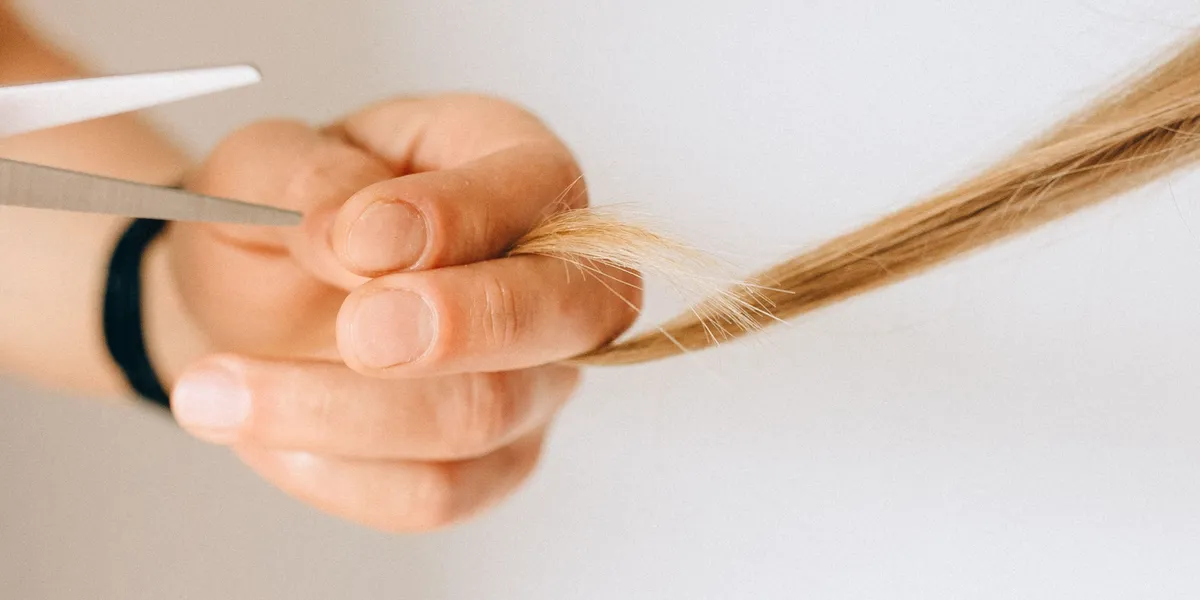
Then a faint snip.
Snip.
“Paper,” I murmured to myself, smiling.
I pictured her hunched over her little desk, tongue poking out in concentration, cutting hearts or stars or whatever six-year-olds cut on quiet mornings.
I sipped my coffee.
I let myself enjoy the calm of a house where everyone I loved was safe under one roof.
Another soft snip drifted down the hallway.
I turned a page without looking up.
Completely unaware that the morning had already changed.
Two minutes later, I heard small feet padding down the hall.
“Mama?”
“In here, sweet pea.”
When she stepped into the kitchen, my whole body went still.
Nicole stood in the doorway in her pajamas, one hand behind her back.
The other was wrapped around something thick and dark.
Her curls were gone.
The curls strangers used to stop us for in grocery stores.
The curls she loved.
The curls she had spent years growing.
What remained hung in jagged chunks around her ears.
In her tiny fist, she held her own ponytail.
“Nicole,” I gasped. “What did you do?”
She did not flinch.
She did not even look guilty.
She simply held the ponytail toward me like she was presenting a gift.
“It’s for Daddy.”
I set my coffee mug down so hard that it splashed onto the counter.
My hands shook.
I dropped to my knees in front of her.
“For Daddy?”
She nodded.
“Sweetheart, did Daddy ask you to do this?”
“No.”
“Then why?”
She tilted her head.
“It’s like Purple Day.”
The words did not register at first.
Then, they did.
Three weeks earlier, her school had held a cancer awareness day.
The children wore purple shirts.
Teachers explained that some people lost their hair when they got sick and that others donated their hair to make wigs.
Nicole had come home glowing.
She had announced that her hair was probably long enough to make two whole wigs.
I had laughed.
I was not laughing now.
“Oh, baby.”
I took the ponytail from her hand.
“Daddy doesn’t have cancer.”
Her face changed.
Just slightly.
“But…”
“But what, honey?”
She looked down at her feet.
“I heard Grandma.”
The kitchen seemed to tilt.
I kept my voice calm.
“You heard Grandma what?”
“On the phone.”
“When?”
“Lots of times.”
I swallowed.
“What did Grandma say?”
Nicole’s lip trembled.
“Am I in trouble?”
“No, sweetheart. You’re not in trouble. I promise.”
She took a deep breath.
“Grandma said Daddy was sick. Really sick. She said the doctors found something bad, and that they weren’t telling you because you couldn’t handle it.”
The cold settled straight into my chest.
“She said that?”
Nicole nodded.
“She said Daddy might lose his hair. Like the people at Purple Day. She said it last week, and then again on Sunday, when you were in the shower. I was sitting on the stairs.”
Every breath left my body at once.
“Oh, Nicole.”
Tears filled her eyes.
“So I wanted to give him mine.”
Her voice cracked.
“Before he loses his. So he won’t be sad.”
I pulled her against me.
I buried my face in the uneven remains of her hair.
“You are the kindest girl in the world.”
“Is Daddy going to die?”
I closed my eyes.
I did not know.
That was the worst part.
I did not know because nobody had told me anything.
My husband had been quieter.
He had been taking phone calls.
He had been disappearing into the garage.
But he had not said one word to me about doctors.
Or tests.
Or anything else.
And somehow, his mother had been whispering those fears into my child’s ears.
“Daddy is not going anywhere,” I said firmly.
“Mama is going to figure this out. Okay?”
She nodded.
I kissed her forehead.
Then I stood, reached for my phone, and searched for Grandma’s number.
The second Nicole’s bedroom door clicked shut, I dialed Grandma.
She picked up on the third ring.
“Hi, sweetheart. Everything okay?”
“Nicole cut off her hair this morning,” I said.
Silence.
Then, “Oh, honey.”
“She cut it off because she heard you telling someone that her father was dying.”
Another pause.
Longer this time.
“She must have misunderstood,” Grandma said gently. “You know how children are.”
“No. She repeated it almost word for word.”
“Well, I don’t remember saying that. Maybe she overheard me talking about Marlene. You know she’s been sick.”
“Don’t.”
“I’m just saying children get confused.”
I closed my eyes.
“I’m not confused. Nicole isn’t confused. She believed her father was dying.”
Grandma sighed dramatically.
“I think you’re upset and looking for someone to blame.”
I hung up.
An hour later, my husband came home carrying a hardware store bag.
The second he stepped into the kitchen, his eyes landed on the ponytail lying on the folded towel.
He froze.
“What happened?”
“Your daughter cut off her hair because she thinks you’re dying.”
The color drained from his face.
“What?”
“Do you want to tell me why she would think that?”
He slowly set the bag on the counter.
Then he sat down.
“I’ve been having some tests.”
I stared at him.
“How long?”
“A few weeks.”
“And your mother knew.”
He winced.
“She drove me to one appointment.”
“Your mother knew.”
“I asked her not to say anything.”
I laughed once.
There was no humor in it.
“Well, she said plenty.”
He rubbed both hands over his face.
“The doctor wasn’t worried.”
“Then why didn’t you tell me?”
He looked away.
“I didn’t want to scare you.”
“By lying to me?”
“I wasn’t lying.”
“You were hiding it.”
He swallowed.
“I kept thinking I’d tell you tomorrow.”
I said nothing.
“Then, tomorrow became the next day.”
His voice cracked slightly.
“And every day I waited, it got harder to explain why I hadn’t told you already.”
That answer, at least, sounded human.
Flawed.
Cowardly.
But human.
“When do you get the results?” I asked.
“Soon.”
The word landed wrong.
Not because of what he said, but because of how he said it.
I stood.
Walked past him.
Walked down the hall.
Walked into the small office where he kept his desk.
In 12 years of marriage, I had never gone through his drawers.
I opened the top one.
Appointment cards.
Medical pamphlets.
A folded lab report.
I unfolded it.
The final line was highlighted.
“No evidence of malignancy. Recommend routine follow-up in 12 months.”
My stomach dropped.
The report was dated three weeks earlier.
I stared at it.
Then I stared at the date again.
Three weeks.
Three entire weeks.
My husband appeared in the doorway.
“You got the results.”
His shoulders slumped.
“I was going to tell you.”
“Three weeks ago.”
“I wanted a second opinion.”
“And?”
“And Mom kept saying you were overwhelmed already. She kept saying even good news would stress you out. She said to let things settle down first.”
I looked at him.
Really looked at him.
“Your mother convinced you not to tell your wife that your cancer scare was over.”
He dropped his eyes.
“I know.”
“Meanwhile, she was telling relatives you were dying.”
His head snapped up.
“What?”
The doorbell rang.
I already knew who it was.
Grandma stood on the porch holding a casserole dish and wearing her church smile.
The one she wore when she wanted everyone to believe she was helping.
“I thought I’d bring dinner.”
“Come in.”
She stepped inside.
Set the dish on the counter.
Then, immediately turned to her son.
“How are you feeling today, sweetheart?”
He stared at her.
“Mom.”
She ignored the warning.
“I’ve been so worried about you.”
I watched her.
For the first time, I was not seeing concern.
I was seeing performance.
“I think it might be best if I stay here for a while,” she continued. “Just until everything settles down.”
There it was.
The thing underneath everything else.
The thing I had been missing.
Every casserole.
Every folded towel.
Every whispered phone call.
Every crisis.
Every tragedy.
Every emergency.
Grandma needed to be needed.
If there was no problem, she created one.
If there was no victim, she found one.
If there was no crisis, she built one.
Because being the rescuer was how she stayed important.
I looked at her.
“You wanted everyone to need you.”
Her smile faltered.
“What?”
“You wanted to be the one holding the family together.”
“That’s ridiculous.”
“You couldn’t stand the idea that everything was fine.”
Her expression tightened.
“I was trying to help.”
“No. You were trying to matter.”
The room went silent.
My husband stared at his mother.
For once, she had no immediate response.
I stepped into the hallway and called the clinic.
The receptionist confirmed the results.
Clear.
Three weeks earlier.
Then, I asked one more question.
“Has anyone besides my husband called regarding his file?”
A brief pause.
“His mother called twice last week.”
I thanked her and hung up.
When I returned to the kitchen, Grandma was rearranging our spice rack.
Like she lived there.
Like she belonged there.
“You called the doctor.”
She froze.
“I was worried.”
“You called twice after his results came back clear.”
“I don’t know what you’re talking about.”
“Really?”
I looked at my husband.
Then back at her.
“You told relatives he was dying.”
“I never said that.”
“You told Linda he had months.”
The blood drained from her face.
That was all the answer I needed.
“You let Nicole believe her father was dying.”
Grandma’s hand flew to her chest.
“I would never hurt that child.”
“Our six-year-old cut off her hair because she thought she was saving her father.”
The room went still.
For the first time all afternoon, Grandma had nothing to say.
She looked at her son.
Waiting.
Expecting rescue.
The way she always had.
But this time, he didn’t move.
He didn’t defend her.
He didn’t explain for her.
He didn’t soften the truth.
He simply looked tired.
“Mom.”
His voice was quiet.
“You need to go.”
Her eyes widened.
“Sweetheart.”
“No.”
“Please.”
“You don’t come back until you can tell the truth about what you did.”
She tried to cry.
She tried to explain.
She tried to make herself the victim.
None of it worked.
She left without another word.
The next morning, Linda called.
Not because Grandma called her, but because my husband did.
For the first time, he told everyone the truth.
By the end of the week, every relative who had spent weeks worrying about a terminal illness knew the scans had been clear all along.
And they learned exactly who had started the rumors.
Something changed after that.
People still loved Grandma, but they stopped treating her like the authority she had spent years pretending to be.
For the first time, nobody automatically believed her version of events.
That was a consequence she could not talk her way out of.
That night, I sat Nicole on the bathroom stool.
The same stool where she used to complain while I brushed out tangles.
“Am I in trouble, Mommy?”
“No, sweetheart.”
I smiled.
“Not even a little.”
I carefully evened out the jagged curls into a soft bob.
My hands felt steady for the first time all day.
“You know what?”
“What?”
“Your heart is the most beautiful thing in this whole house.”
She grinned at her reflection.
“Even prettier than my hair?”
“Much prettier.”
She thought about that.
Then she smiled.
“Can my hair still help somebody?”
My husband stood quietly in the doorway.
Watching us.
“We’ll ask,” he said softly.
“And even if it can’t, what you tried to do already helped me.”
Nicole turned toward him.
“It did?”
He knelt beside her and kissed the top of her newly trimmed hair.
“It reminded me who I should have protected first.”
Nicole wrapped her arms around his neck.
“Good,” she said.
We laughed through our tears.
For the first time in weeks, the heaviness that had settled over our home felt lighter.
My husband stayed beside us while I finished trimming Nicole’s hair.
When I was done, Nicole turned toward the mirror and studied her reflection.
“What do you think?” I asked.
She smiled.
“I look brave.”
“You do,” I said.
Her father nodded.
“The bravest person I know.”
Nicole beamed.
Then, she slipped her small hand into mine and her other hand into her father’s.
And in that moment, standing together in the tiny bathroom, I realized something.
She had cut off her hair because she was afraid of losing her father.
Instead, she had helped him find his way back to us.
That night, Nicole fell asleep smiling.
And for the first time in a long time, so did we.