Maria only meant to clear her head with a walk through town. Instead, she found herself inside a decaying house where one upstairs room held hundreds of dolls and a mystery that seemed to be waiting for her.
I’m 32 years old, single, and honestly, my life is pretty quiet.
That was the way I usually described it when people asked.
Quiet sounded better than lonely.
Quiet sounded like a choice, like I had built a peaceful life on purpose and not simply ended up in one after years of small disappointments, missed chances, and friendships that faded into polite birthday texts.
My name is Maria, and most evenings, I take long walks around town just to clear my head.
I started doing it after my last relationship ended. At first, I only walked around the block because staying inside my apartment felt impossible.
Every corner reminded me of someone who no longer called, no longer left a toothbrush by the sink, and no longer asked how my day had gone.
Then one block became three, and three became a habit.
By spring, I knew which houses had wind chimes, which porches smelled like cigarette smoke, and which dogs barked before I even reached their fences.
That night was colder than I expected. The sky was dark blue, not fully black yet, and the streetlights had just started blinking on one by one.
I had left my apartment after dinner without much of a plan, wearing an old gray coat and sneakers that were not made for long walks but had carried me through enough of them.
I passed the bakery on Center Street.
The owner was wiping down the front window. I passed the tiny laundromat that always smelled like detergent and hot metal. Then I turned down a road I usually avoided because it led into one of the older neighborhoods.
The houses there stood farther apart, with deep front yards and tall trees that threw long shadows across the sidewalk.
Some of them were beautiful in a tired sort of way, with wide porches, cracked stone steps, and stained-glass windows that probably looked stunning when sunlight hit them.
One night, as I wandered through an older neighborhood, my attention was drawn to a large abandoned house at the end of a street.
I stopped walking.
The house sat behind a rusted iron fence, half hidden by weeds and wild bushes that had swallowed most of the front yard. It was bigger than the others, three stories tall, with peeling white paint and dark windows that looked like closed eyes.
The porch sagged slightly on one side, and the roofline dipped as if the whole place had grown tired of standing.
Something about it awakened a strange feeling of nostalgia.
It reminded me of being a kid, when my friends and I were always curious about abandoned places and the stories hidden inside them.
Back then, we used to dare each other to peek through cracked garage doors and climb over fences behind old barns.
We never wanted to steal anything or break anything.
We just wanted to know. We wanted to imagine who had lived there, what they had left behind, and why they had gone.
I had not felt that kind of curiosity in years.
At 32, curiosity usually came with bills, warnings, and common sense. I knew better than to walk into an abandoned house alone at night. Any reasonable woman would have kept moving. She would have gone home, locked her door, made tea, and watched something safe on television.
But I stood there staring at that house as if it had called my name.
“Don’t be ridiculous,” I whispered to myself.
My voice sounded too loud on the empty street.
Before I knew it, I was walking up the overgrown path toward the front door.
Branches scratched at my coat. Dead leaves crunched under my shoes. I kept glancing over my shoulder, half hoping someone would see me and ask what I was doing so I could laugh, pretend I had made a mistake, and leave.
No one came.
The front steps groaned beneath my weight.
Up close, the door looked worse than I had thought. The wood was swollen and cracked, and the brass knob was cold under my fingers.
I expected it to be locked.
It was not.
The door opened with a long, aching creak that made my heart jump into my throat. I stood on the threshold for a moment, one hand still on the knob, waiting for something to happen. An alarm. A shout. A raccoon exploding out of the dark.
Nothing.
The house was completely empty. Dust covered every surface, and the air smelled like old wood and forgotten memories.
I stepped inside.
My sneakers left faint marks on the dusty floorboards. The entryway opened into a wide hall with a staircase on the left and doorways leading into shadowy rooms. There was no furniture, no rugs, and no pictures on the walls.
Only faded rectangles where frames had once hung.
I wandered from room to room, imagining the family that had once lived there.
In the front room, I pictured a Christmas tree near the window, with children pressing their faces to the glass while snow fell outside.
In the dining room, I imagined a long table, Sunday meals, arguments over salt, someone laughing too loudly. In the kitchen, the counters were bare and stained, but I could almost see a woman standing by the sink with flour on her hands.
In my mind, I could almost hear children running through the hallways and parents talking in the kitchen.
The house felt less empty when I imagined it that way.
It felt less like a dead thing and more like a sleeping one.
I should have left after the first floor. I know that now.
Instead, I found myself climbing the stairs.
The banister wobbled under my palm, and each step complained beneath me. The second floor was colder. The hallway stretched in both directions, with doors standing open like mouths.
One room had faded blue wallpaper. Another had a cracked mirror leaning against the wall, reflecting only darkness behind me.
I kept moving because stopping felt worse.
Then I opened a door near the back of the second floor and stepped into what looked like a child’s bedroom.
The sight inside made me stop breathing for a second.
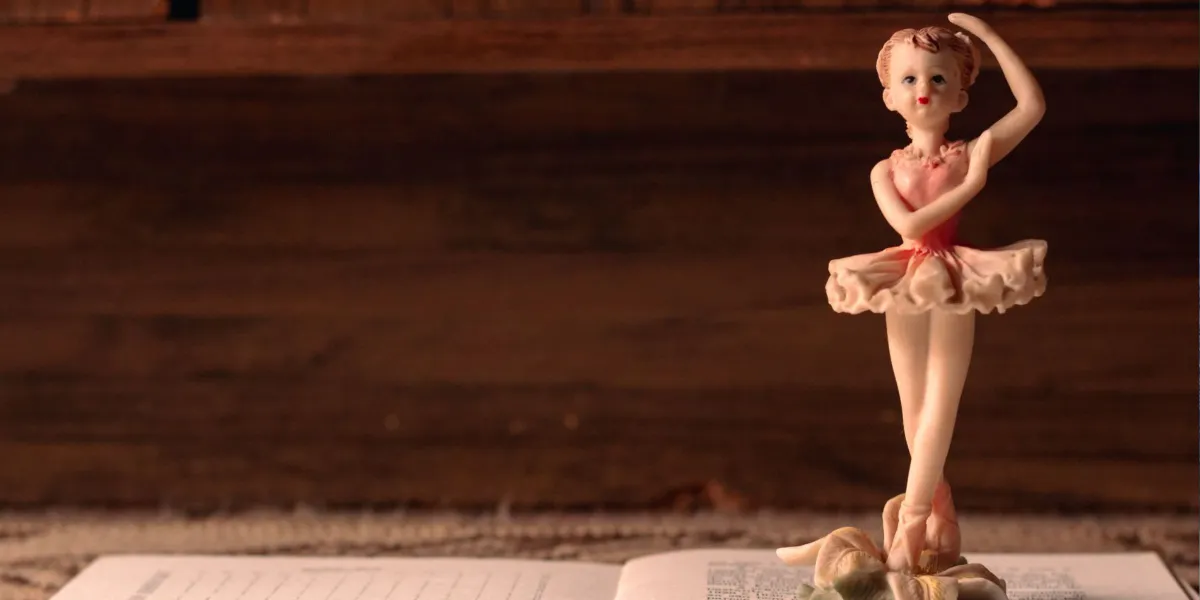
In the center of the room stood a massive pile of dolls.
Hundreds of them.
Big dolls, small dolls, old dolls, new dolls. They were stacked into a huge mound that nearly reached my waist.
Some had porcelain faces with painted pink cheeks. Others were soft-bodied baby dolls with cloudy plastic eyes. A few were missing arms. One had no hair.
Another wore a tiny yellow dress covered in dust.
I stood frozen in the doorway, staring.
There was nothing else in the room. No bed. No dresser. No curtains. Just that mountain of dolls sitting in the center like some strange offering.
My skin prickled.
I slowly walked closer, trying to understand why anyone would leave so many dolls in one place.
The floorboards creaked beneath my feet. Several dolls stared upward, their glassy eyes catching the weak moonlight from the window. I told myself they were just toys. Forgotten things. Nothing more.
Still, my mouth had gone dry.
As I bent down to examine them, wondering what kind of person had done this, I suddenly heard a voice behind me.
“I put them here.”
Every muscle in my body froze.
I spun around.
An old woman stood in the doorway, one hand wrapped around the frame as if she needed it to stay upright.
She was small, maybe in her late 70s, with a pale blue cardigan buttoned to her throat and silver hair pinned back in a loose bun. Her eyes were bright, but tired in a way that made her seem older than the house itself.
For a moment, neither of us spoke.
Then I stumbled backward and nearly stepped into the pile of dolls.
“I’m sorry,” I blurted. “I didn’t think anyone lived here.”
“No one does,” she replied.
That did not make me feel better.
I looked past her into the dark hallway, wondering how fast I could run if I had to. “I shouldn’t be here. I’ll leave.”
“You found them,” she said, her voice soft.
I swallowed. “The dolls?”
She nodded and stepped into the room. Her shoes made no sound on the dusty floor. “I wondered when someone would.”
There was something in her face that stopped me from running. She did not look angry. She looked heartbroken.
“Why are they here?” I asked.
The woman walked to the pile and lowered herself carefully to her knees. She picked up a small doll in a red dress and brushed dust from its cheek with her thumb.
“My name is Soraya,” she said. “This was my house.”
I glanced around the empty room. “You lived here?”
“For 41 years.” She gave a faint smile. “My husband hated the peeling paint, but I loved every crack in these walls.”
I looked at the dolls again. “And these?”
Her hand tightened around the doll.
“They belonged to children who passed through this house.”
The room seemed to grow colder.
“What do you mean?”
Soraya looked up at me. “My husband and I were foster parents. We took in children when the county called. Some stayed a week. Some stayed years. Some arrived at midnight in pajamas two sizes too small, holding nothing but a trash bag.”
My throat tightened.
She set the red-dressed doll gently on top of the pile. “I gave each child a doll on their first night here. Not always a pretty one. Not always new. But something that was theirs. Something they did not have to share, lose, or earn.”
I looked at the mountain of tiny faces, and my fear began to shift into something heavier.
“How many children?” I whispered.
“Two hundred and seventeen.”
I stared at her.
She smiled sadly. “My husband used to say this house never slept. There was always someone crying, laughing, breaking a plate, asking for extra syrup, or refusing to brush their teeth.”
I almost smiled, but the ache in her voice held me still.
“So why leave them here?”
Soraya’s eyes lowered. “Because some children took their dolls when they left. Some did not. The ones left behind were never trash to me. Each one meant a child had been here. Each one had a name.”
She reached for another doll, a baby doll with one missing eye.
“This one belonged to Stacy. She was four. She screamed every time someone closed a door because it reminded her of being locked in a closet.”
My stomach turned.
Soraya picked up a soft brown bear tucked between two dolls. “This was Devon’s. He was ten and pretended he was too old for toys. He slept with it under his shirt every night.”
I sank slowly to the floor across from her, no longer caring about the dust on my jeans.
“You remembered all of them?”
“I tried,” she answered. “People forget foster children too easily. They move from home to home, file to file. I could not control where they went after me, but I could remember that they had been loved here.”
I looked around the room again.
What had seemed frightening minutes ago now felt sacred.
“Why did you leave the house?” I asked.
Soraya looked toward the window. “My husband died. After that, I got sick. My daughter made me move into assisted living. She said I was too old to take care of a place like this.”
“Was she right?”
A small laugh escaped her. “Yes. But I hated her for it anyway.”
I nodded before I could stop myself. “I understand that.”
She studied me. “Do you?”
I thought about my quiet apartment. My long walks. The way I had convinced myself I liked being alone because it was easier than admitting how tired I was of it.
“I think I do,” I said.
Soraya reached into the pocket of her cardigan and pulled out a folded piece of paper. “I came tonight because the city is tearing the house down next week. They sent me notice months ago, but I could not bring myself to come. Then I thought of the dolls.”
“You came alone?”
“I had to say goodbye.”
Her voice broke on the last word.
Without thinking, I moved closer and touched her hand. It was thin and cold.
“You should not have had to do that alone.”
She looked at me then, really looked at me, and tears filled her eyes.
“I used to think a house was only wood and nails,” she whispered. “Then children came here afraid of the dark, and by morning, they were asking for pancakes. That is when I learned a house can become a pair of arms.”
I blinked hard, but the tears came anyway.
“What will happen to the dolls?” I asked.
“I do not know.” Her lips trembled. “I thought I would gather a few, but then I saw them all, and I could not choose.”
The answer came to me slowly, then all at once.
“We don’t have to choose.”
Soraya frowned. “What?”
I pulled out my phone. “I work at the community center on Oak Street. We run clothing drives, school supply drives, and holiday programs. We can clean them. Photograph them. Put each one with a note that says what it stands for. Maybe some can go to children who need comfort now.”
Her hand flew to her mouth.
“And the damaged ones?” she asked.
“We keep them too,” I said firmly. “They mattered to someone.”
For the first time, Soraya smiled fully.
Over the next two days, I came back with boxes, masks, cleaning cloths, and three volunteers from the center.
Soraya sat in a folding chair and told us the stories she could remember. Stacy. Devon. Maribel. Jonah. Nina. Children who had cried in that room, healed in that room, and left pieces of themselves behind.
By the time the city arrived, the room was empty.
Not abandoned. Empty.
There was a difference.
A month later, we opened a small display at the community center called “The Room That Remembered.” Beside it, we placed baskets of restored dolls for children entering foster care. Each one came with a card that said, “You are not forgotten.”
Soraya came on opening day in her pale blue cardigan. She held my hand the whole time.
“You gave them a future,” she murmured.
“No,” I told her, watching a little girl choose the red-dressed doll. “You did that first.”
That night, I did not take my usual walk because I needed to escape my life.
I walked because, for the first time in a long while, I wanted to go somewhere.