My mother spent her final weeks hand-stitching my prom gown while cancer stole what little strength she had left. I thought she was trying to give me one beautiful night. On prom evening, she tied the final sash around my waist and told me the truth.
My mother was dying of stage four cancer. Her body was hollowed out by aggressive treatments that had drained every single penny of our family savings.
I was 18, a senior in high school, and I had learned to hate the sound of envelopes sliding through our mail slot.
Bills came in white envelopes, hospital notices came in blue ones. Insurance letters came in thick packets that made my mother close her eyes before opening them.
Before she got sick, Mom was a seamstress.
Her name was Sarah, but everyone in our building called her Miss Sarah because she fixed everyone’s clothes with a lot of care.
She hemmed pants, repaired zippers, altered bridesmaid dresses, and once stayed up until two in the morning fixing a neighbor’s daughter’s quinceañera dress because the girl had cried on our couch.
“Good work hides in the details,” Mom always said.
She taught me that when I was little.
I would sit under her sewing table with crayons while she worked, listening to the steady hum of the machine.
Back then, that sound meant safety. Rent was paid. Dinner was cooking. Mom was close.
After cancer, the same sound became rare.
Treatment took almost everything from her, including her hair, her appetite, her strength, and her ability to walk from the bedroom to the kitchen without stopping.
Then it took our money.
My father had left when I was nine. He sent birthday cards for a few years, then stopped. It had always been just me and Mom, and she never let me feel like that was a sad thing.
But cancer made our little family feel painfully small.
By spring, our savings were gone.
Mom’s retirement account was gone. The emergency fund she had built from years of tiny sacrifices was gone too.
So when prom season started, I ignored it.
My friends sent photos in the group chat. They were ready to wear dresses with glittering bodices and lace backs. Basically, they had dresses that cost more than our monthly grocery budget.
I muted the chat.
One afternoon, my best friend, Jenna, cornered me by my locker.
“Lily, have you bought your ticket yet?”
“No.”
“Prom is in three weeks.”
“I know.”
She frowned. “You’ve wanted to go since freshman year.”
“I changed my mind.”
“No, you didn’t.”
I shut my locker. “Jenna, we can’t afford it.”
Her face softened. “I could help.”
“No,” I said quickly. “Please don’t.”
I couldn’t stand charity.
And that wasn’t because I thought I was above it, but because I was already living inside so much helplessness that one more kind offer felt like it would break me.
That same week, I got my acceptance email from Ashford University.
It was my dream school.
I read it sitting on the bathroom floor so Mom wouldn’t hear me crying.
I had earned a partial scholarship, but partial wasn’t enough. Not with hospital bills stacked on our kitchen table and not with Mom’s prescriptions costing more than our electricity.
So, I printed the acceptance letter, folded it twice, and hid it in the back of my dresser drawer.
That night, Mom found me staring at the prom flyer on the refrigerator.
“Are you going?” she asked.
I pulled the flyer down. “No.”
Her eyes sharpened. “Why not?”
I shrugged. “It’s just prom.”
“Lily.”
I hated it when she said my name like that. Like she could see every lie before it reached my mouth.
“We can’t afford it,” I said. “The ticket, the shoes, the dress. We can barely afford groceries.”
Mom sat very still.
“You are going,” she whispered. “And you will wear the gown of your dreams.”
I almost laughed because it sounded impossible.
“Mom, please. I don’t need prom.”
“Yes, you do.”
“No, I need you to rest.”
Her jaw tightened. “Do not make yourself smaller because life has been cruel to us.”
I had nothing to say after that.
The next morning, she went into her sewing room.
I heard drawers opening. Boxes scraping. Hangers sliding against the closet rod.
When I walked in, she was sitting in her wheelchair with a sketchpad on her lap.
“What are you doing?” I asked her.
“Designing,” she said.
“Mom, please.”
She ignored my tone and held up the sketch.
It was a gown with a fitted bodice, soft sleeves, and a long flowing skirt. Around the waist, she had drawn a silk sash.
“It needs movement,” she said. “You walk too fast when you’re nervous.”
I stared at her. “You are not making me a prom dress.”
“I already am.”
“We don’t have fabric.”
She smiled. “I’ll handle that.”
I should have pushed harder. I should have asked more questions. But she looked alive in that moment.
Two days later, emerald silk appeared on her sewing table.
It was the most beautiful fabric I had ever seen. It was deep green, almost glowing, with a softness that slipped through my fingers like water.
“Where did you get this?” I asked.
“A lucky find.”
“Mom…”
She looked away. “Let me have my secrets.”
I didn’t know then that she had sold her mother’s emerald necklace. It was the last thing Grandma had left her, a necklace Mom only wore on important days. She used to let me hold it when I was little, warning me to keep both hands underneath it.
“One day,” she once told me, “this will be yours.”
I thought she had put it away for safekeeping.
For the next three weeks, my mother stayed up until sunrise.
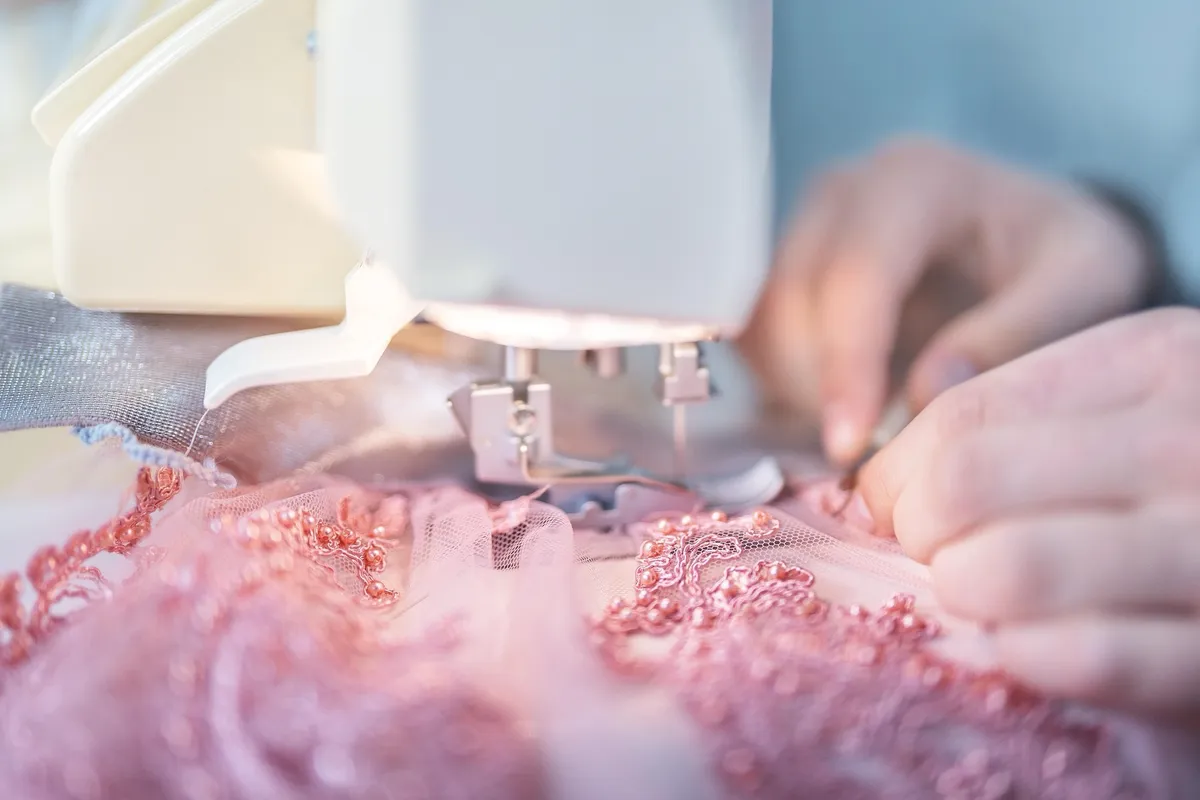
Through the blinding pain, nausea, and the constant shaking of her hands — bruised black and blue from IV lines — she hand-stitched every single bead and layer of emerald silk.
I still remember the rhythmic, painful click of my mother’s sewing machine echoing through our tiny apartment at three in the morning.
Click.
Pause.
Click.
Pause.
Sometimes the pauses scared me more than the sound itself.
One night, I woke up thirsty and found her bent over the machine, one hand pressed to her ribs.
“Mom?”
She jumped. “You should be asleep.”
“So should you.”
“I’m almost done with this seam.”
“You said that yesterday.”
She gave me a small smile. “It’s a very long seam.”
I crossed the room and saw tiny spots of blood on the fabric scraps near her hand.
My stomach turned.
“Mom! You pricked yourself.”
“C’mon, darling. It happens.”
“But your fingers are shaking…”
“It’s okay. At least they still work.”
I started crying before I could stop myself.
I begged her to rest, crying as I saw her needle-pricked fingers trembling in the dim light. But she just smiled, telling me she needed to leave me something perfect.
I thought she meant the dress.
Now I know she meant a memory.
A few days later, Mom found my Ashford acceptance letter.
I came home from school and saw it on the kitchen table.
She sat beside it, pale and quiet.
“Why was this hidden in your dresser?”
My backpack slid off my shoulder.
“I was going to tell you.”
“When?”
“I don’t know.”
“Lily—”
“I’m not going,” I interrupted.
Her face changed. “Yes, you are.”
“No, Mom,” I said. “We can’t afford it.”
“You got a scholarship.”
“A partial one. There’s still housing, books, food, and everything else.”
“We’ll figure it out,” Mom smiled.
“No,” My voice cracked. “There is no ‘we.'”
The second I said it, I wished I could take it back.
Mom looked down.
“I didn’t mean—” I began.
“Yes,” she whispered. “You did.”
I sat across from her and cried. “I can’t leave you.”
She reached for my hand. Her fingers felt cold.
“Sweetheart, you are supposed to leave me.”
“No.”
“Yes. That’s what children do. They grow up. They build lives. They go places their mothers dreamed of seeing.”
“I don’t want a life that starts with losing you,” I said.
Her eyes filled, but she didn’t look away.
“You already started losing me, Lily. Don’t lose yourself, too.”
After that, she became even more determined.
The dress grew slowly.
First came the lining.
Then the bodice.
Then the skirt.
Then the beads.
Some evenings, when pain made her hands useless, she asked me to help.
“Sit,” she said one night, patting the chair beside her.
“I don’t know what I’m doing,” I said.
“I’ll teach you,” she smiled.
Her foot slipped off the sewing pedal twice before she gave up and nodded toward it.
“You press. Slowly.”
I sat at the machine, terrified. “What if I ruin it?”
“You won’t, sweetheart.”
“What if I do?”
“Then we fix it.”
Her hand covered mine, guiding the fabric.
“Don’t fight the cloth,” she said. “Listen to it.”
“That sounds like something from a fortune cookie,” I joked.
She laughed, then winced.
I stopped immediately.
“Mom?”
“I’m okay. Keep going.”
So I did.
For ten minutes, I pressed the pedal while she guided me. The machine hummed, and for the first time in months, I remembered being little under her sewing table.
When we finished the seam, she looked proud.
“There,” she said. “Now part of it is yours too.”
I didn’t understand why that mattered so much to her until later.
One afternoon, I came home early and found her on the couch surrounded by old photo albums. There was a photo of me at kindergarten graduation, missing a front tooth. Then, there was a photo of me in a Halloween butterfly costume she had sewn from dollar-store fabric.
Then there was me at 12, holding a crooked birthday cake we had made together.
“What are you doing?” I asked.
She brushed her thumb over a photo. “Just remembering.”
“You’ve been doing that a lot.”
She smiled, but her eyes were wet. “I’m trying to memorize everything.”
My chest tightened. “Mom, don’t say things like that.”
“Okay.”
But she didn’t put the album away.
As prom got closer, her decline became impossible to ignore.
She slept through alarms, stopped asking for coffee, and barely ate. I noticed there were no new appointment cards on the fridge, no reminders from the clinic, and no long insurance calls.
One evening, I overheard her on the phone.
“No,” she said quietly. “I won’t be continuing.”
I froze in the hallway.
A pause.
“I understand the risks,” Mom said.
Another pause.
“I’ve made my decision.”
When she saw me, she ended the call.
“Who was that?” I asked.
“No one important,” she said while not meeting my eyes.
“Was it the hospital?”
She looked tired. “Lily, not tonight.”
I wanted to argue, but she started coughing so hard that I ran for water instead. Then I didn’t really get the chance to talk about it.
The dress was finally finished on prom night, and it looked like a masterpiece.
It hung from the closet door like something from a dream.
Emerald silk. Tiny beads. Soft sleeves. A sash that caught the light whenever it moved.
I put it on carefully, afraid my hands would damage what hers had suffered to make.
It fit perfectly.
Of course it did. Mom had always known how to make fabric understand a body.
As I stood in front of the mirror, tears streaming down my face, my weak mother slowly stood up from her wheelchair to tie the final silk sash around my waist.
“Mom, sit down,” I said.
“In a minute.”
“You can barely stand.”
“I said in a minute.”
She tied the sash with shaking hands, then leaned forward.
She leaned in close, resting her chin on my shoulder, her breathing shallow.
Our eyes met in the mirror.
That was when she whispered the secret she had been keeping. It wasn’t a word of encouragement.
It was a confession about why her health had deteriorated so rapidly over the last month, and the unthinkable thing she had done to pay for that silk.
“I stopped treatment,” she whispered.
For a second, I didn’t understand.
Then I did.
I turned around so fast I nearly tripped over the skirt.
“What?”
“A few weeks ago.”
“No.”
“Lily—”
“No, Mom. No.”
She reached for me, but I stepped back.
“You told me it was the cancer getting worse!” I protested.
“It was.”
“But treatment could’ve helped.”
“It could’ve bought a little time,” Mom brushed it off. “Nothing else.”
“Then why would you stop?”
“Because the time was too expensive.”
I covered my mouth. “You don’t get to decide that.”
“I had to.”
“No, you didn’t!”
Her eyes drifted toward the emerald fabric. “The silk came from your grandmother’s necklace.”
I froze. “What?”
“I sold it.”
“Mom…”
She touched the edge of the skirt.
“It was the most valuable thing I owned. And it was sitting in a jewelry box while you were giving up pieces of your future.”
Tears streamed down my face. “That necklace was yours.”
“And now part of it is yours again.”
I shook my head, crying so hard I could barely breathe.
Then, she pointed weakly toward her desk. “Open the top drawer.”
I didn’t move.
“Please,” she said.
Inside was a folder from Ashford University.
My name was on it.
There were tuition deposit receipts. Housing forms. Copies of savings bonds I didn’t know existed. A letter from Mom’s old credit union. Everything arranged neatly in plastic sleeves.
My knees went weak. “What… what is this?”
“Your beginning,” Mom said.
I turned to her. “The money from the treatment?”
“The money that was left after the hospital stopped taking everything,” she said.
“You saved it for me?”
“I protected it for you.”
“You should’ve used it, Mom!”
“For what? A few more weeks in a chair, too sick to hold your hand?”
“Those weeks were mine too!”
She flinched, and I hated myself for saying it.
Then she nodded. “I know.”
The anger drained out of me, leaving only grief.
I knelt in front of her. “Why didn’t you tell me?”
“Because you would have spent the rest of my life trying to save me instead of living yours.”
“I’m supposed to save you. You’re my Mom. I’m definitely supposed to save you.”
“No, baby.” She touched my cheek. “You’re supposed to survive me.”
That was the moment I broke down.
She pulled me close with what little strength she had, and I cried into her lap like I was five years old again.
After a while, she lifted my chin.
“Go tonight,” she said.
“I can’t,” I replied as I wiped my tears.
“Yes, you can.”
“How am I supposed to dance after this?”
“You don’t have to dance. You just have to show up.”
“Why?”
“Because every stitch in that dress says you were loved. I want the world to see that.”
I couldn’t say no after that. I went because she asked me to.
Jenna cried when she saw the dress.
“Lily,” she whispered. “You look like a princess.”
I almost told her the truth. Instead, I said, “My mom made it.”
All night, people complimented me.
I smiled, took photos, and danced once with Jenna and once with a boy from chemistry class who told me my dress looked like moonlight on leaves.
But my hands kept touching the sash, the beads, and the seams. The dress was proof that my mother had poured her last strength into something beautiful.
I left early.
When I got home, Mom was awake in her wheelchair by the window.
The sewing machine sat beside her, silent.
“You’re back,” she said.
“I’m back.”
“Was it beautiful?” she asked.
I knelt beside her and laid the edge of the skirt across her lap.
“Yes,” I said.
She smiled. “Good.”
I took her hand. “I’m still mad at you.”
“I know.”
“And I love you.”
“I know that too.”
She closed her eyes, still smiling.
Years later, I still have the gown.
I wore it once more, under my graduation robe at Ashford, where Mom’s folder got me started, and her love carried me through.
Now it hangs in my closet in a special garment bag.
Sometimes, when life feels too heavy, I unzip it and touch the emerald silk.
I hear the sewing machine at three in the morning.
I see her bent over the fabric, fighting pain with every stitch.
People think my mother made me a prom dress.
They’re wrong.
She made me proof that I was loved enough to keep living.