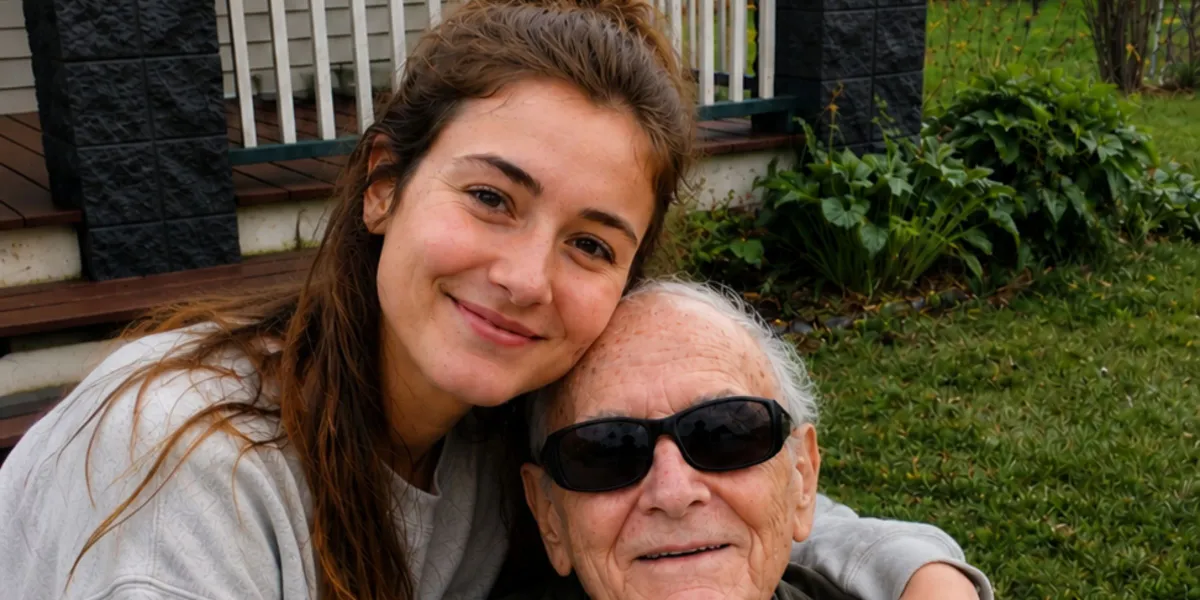
Desperation has a way of making unusual opportunities seem reasonable. Looking back, I never expected that accepting one peculiar job would lead me into a story I still struggle to explain today.
I was 23, carrying a full college course load while working to finish my degree and drowning in student loans.
When I wasn’t focused on school, I was helping my mom care for my younger brother, Caleb, who had serious health problems. I pretended everything was fine, but it wasn’t.
At almost 12 a.m., I sat at our kitchen table surrounded by textbooks, overdue notices, and hospital bills. My homework stared back at me, untouched.
From the next room, Caleb coughed. The sound made my stomach tighten every time.
I was helping my mom.
My mom stepped into the kitchen wearing her robe. She looked exhausted. The dark circles under her eyes seemed deeper every week. She placed a mug of tea beside me.
“You should be asleep, Taylor.”
“So should you.”
She smiled, but it faded quickly.
Caleb’s treatments had drained everything we had. Mom worked nonstop: mornings at a grocery store and nights cleaning office buildings. I worked at the diner, taking every extra shift I could whenever I wasn’t in class.
Even then, it wasn’t enough.
Caleb’s treatments had drained everything.
“Dr. Patel wants to try a new treatment plan,” Mom said quietly.
“That’s good, right?”
The pause told me the rest.
“It’s expensive?” I asked.
She nodded.
Neither of us said anything for a moment. Then her eyes landed on the pile of unopened mail.
She picked up an envelope from the hospital and opened it before I could stop her.
I watched her face fall.
“How much?” I asked.
“It’s okay.”
“Mom.”
She swallowed.
“That’s good, right?”
“Four thousand dollars,” my mom replied.
My chest tightened.
We didn’t have that kind of money. We barely had $400.
Mom reached over and touched my shoulder.
“Focus on graduating,” she said. “We’ll figure it out.”
Then she disappeared down the hallway.
A minute later, I heard her bedroom door close.
I stared at the bill for a long time.
“We’ll figure it out.”
I grabbed my laptop and started searching job boards. I’d already applied for most of them.
Then I found an ad buried near the bottom of the page.
A family was looking for a young woman to spend time with an elderly, blind veteran.
The pay was incredible!
Then I read the final sentence.
“Applicant must be willing to portray his estranged granddaughter who’s in her early 20s.”
I blinked.
Then I read it again.
It felt wrong, but after staring at that medical bill, I clicked “Apply.”
The pay was incredible!
***
A week later, my phone rang.
“Taylor?” a woman asked.
“Yes.”
“This is Margaret. You applied for the companion position. I want to meet you.”
***
Two days later, I drove to a large house in a quiet neighborhood.
Margaret answered the door, looking polished, calm, and impossible to read.
She led me into a study.
After we sat down, she got straight to the point.
“I want to meet you.”
“My father is Walter. He’s 82. He lost his sight after several strokes. His hearing isn’t what it used to be either.”
Margaret slid a folder across the desk.
“My niece, his granddaughter, Vanessa, left the family 12 years ago after her parents died in a plane crash, and no one has seen her since. She moved abroad after college, changed her number more than once, and deleted every social media account she had. She hasn’t attended a single family gathering since she left.”
Margaret tapped the folder.
“My father still asks about her despite not having seen her since she was 16.”
I opened it.
“She moved abroad after college.”
Inside were school records, family stories, favorite foods, and childhood memories.
“You will pretend to be Vanessa for him.”
I hesitated.
“Isn’t this wrong?”
Margaret sighed.
“Maybe. But my father is lonely. He’s nearing the end of his life, and Vanessa isn’t coming back.”
I thought about Caleb and Mom.
“I’ll do it.”
My new boss nodded.
“Isn’t this wrong?”
***
The first Sunday I visited, I found Walter sitting near a window. A blanket rested across his knees.
The moment he heard us enter, he frowned.
My heart pounded.
“Hi, Grandpa.”
He reached out, and I took his hand.
“Vanessa? You finally came?”
“I’m here.”
For the next hour, we talked about the weather, his garden, and his late wife, Eleanor.
Walter spoke about her constantly.
“Vanessa? You finally came?”
“Eleanor made sure everything important was protected,” Walter said with a smile. “She was smarter than the rest of us.”
At the time, I didn’t think much about the comment.
Before I left, Walter squeezed my hand.
“Will you come back next Sunday?”
“Yes, of course.”
His smile widened.
***
Outside, Margaret handed over an envelope.
The amount inside was more money than I’d ever held at one time!
“She was smarter than the rest of us.”
It was enough to pay part of the hospital bill.
I drove home, feeling relieved.
And guilty.
***
The Sundays continued.
At first, I treated it like a job, and every conversation felt like a lie.
But Walter never questioned me. Instead, he continued telling stories about his military service, raising his family, and, most of all, Eleanor.
Sometimes he’d laugh halfway through a story and forget where he was going, and other times he’d sit quietly and enjoy having someone nearby.
I drove home, feeling relieved.
***
One afternoon, Walter patted my hand.
“You’re a good girl.”
I smiled.
“Thanks.”
“Eleanor would’ve liked you.”
That made me feel guilty.
***
A few weeks later, Margaret started asking strange questions.
“Did Dad mention the house?”
“No.”
“What about his trust documents?”
“No.”
“The safe deposit box?”
I frowned.
Margaret looked frustrated.
That made me feel guilty.
“Your father talks about roses and baseball,” I explained, having grown closer to Walter.
His daughter forced a smile.
“Keep listening.”
That conversation bothered me even more when it happened repeatedly.
***
The following Sunday, Caleb received approval for a treatment plan that still left us responsible for thousands of dollars in costs. That same week, my car needed repairs, so walking away from the job still wasn’t an option.
Even though something felt wrong.
“Keep listening.”
***
A month later, Margaret invited me to a family lunch.
Before we went inside, she stopped me.
“Remember your details.”
“I won’t forget.”
She looked nervous, and for the first time, I wondered if she had more invested in this lie than she admitted.
Inside, I met cousins, in-laws, and Walter’s nephew, Richard.
Richard watched me carefully.
At first, I assumed he suspected me.
“I won’t forget.”
Then I noticed the questions he asked.
They weren’t trying to expose me; they were testing me!
They were making sure I could maintain the story and that no one else became suspicious.
By the time lunch ended, I realized Richard was helping Margaret.
Walter sat quietly through most of it, but his hand found mine under the table.
And somehow, that meant more than the approval of anyone else in the room.
They were testing me!
***
The Sunday after the family lunch, Margaret was out running errands, and for once, it was just Walter and me.
We sat in the sunroom drinking tea.
“What’s your real name, sweetheart?”
My heart stopped. I stared at him.
He smiled patiently.
I could have lied.
Instead, I whispered, “Taylor.”
Walter nodded.
“I thought so.”
I could have lied.
“You knew?”
“From the first day,” Walter revealed.
I felt sick.
“I’m sorry for lying to you.”
“But you’re also the only person who’s visited me every week because you wanted to.”
I blinked.
“Wanted to?”
Walter chuckled.
“Do you think I can’t tell when someone cares?”
The veil of deceit finally lifted, and for the next hour, we talked honestly.
“I’m sorry for lying to you.”
I told him about my brother, my mom, college, and the hospital bills.
I expected judgment; instead, Walter listened.
When I finished, he squeezed my hand.
“You’ve carried a lot for someone your age.”
“So have you.”
He laughed softly, and after that day, something changed between us.
I stopped pretending, and he stopped calling me “Vanessa” when we were alone.
Neither of us mentioned it to Margaret.
I expected judgment.
***
The following months became some of the best of my life.
Walter never acted like my employer; he became more like family.
Sometimes we’d sit in the garden while he told stories. Other times, we’d play cards marked in Braille, and I couldn’t win because he somehow remembered every move.
He introduced me to Mr. Hollis during one visit. Mr. Hollis was Walter’s attorney, and he stopped by often when Margaret wasn’t around.
The two men had been friends for decades.
He became more like family.
“Hollis has been cleaning up my messes since 1978,” Walter grinned. “And he’ll keep making them until one of us dies.”
Mr. Hollis laughed.
I didn’t realize how important that friendship would become later.
***
Around the same time, Margaret’s questions became more aggressive.
“Did Dad mention the trust?”
“The house?”
My answer was always “No.”
She sighed.
Margaret’s questions became more aggressive.
“What does he talk about all day?” Margaret asked.
“His wife.”
She rolled her eyes.
That bothered me a lot.
***
The following Sunday, Richard joined us for lunch.
For the first time, I saw him corner Walter after the meal.
“You should think about simplifying the estate,” Richard said.
Walter smiled.
“I’m not dead yet.”
Richard forced a laugh, but I caught the look that passed between him and Margaret.
That bothered me a lot.
***
A few weeks later, Walter ended up in the hospital on a Wednesday.
Margaret didn’t call me. I found out through Mr. Hollis and drove there immediately.
***
Walter looked smaller, and his eyes stayed closed, but when he heard my voice, he smiled.
“Taylor.”
I sat beside him.
“You aren’t allowed to die.”
“I’ll keep that in mind,” he replied.
I laughed through my tears as Mr. Hollis looked on.
For the next hour, we talked, and before I left, he squeezed my hand.
“You aren’t allowed to die.”
***
Walter came home a few days later, but he wasn’t the same. Some days, he barely left his room.
I spent more time at the house than ever because I couldn’t imagine not being there.
***
One afternoon, while we sat in the garden, Walter said, “You know, Taylor, people spend their whole lives looking for proof that they’re loved.”
“You already know you’re loved.”
“Maybe, but it’s nice to be reminded.”
I swallowed hard.
“I love you, too.”
His smile widened.
“You already know you’re loved.”
***
Walter passed away three weeks later.
Mr. Hollis called me early the following morning.
I sat on the edge of my bed after hanging up, and my mom found me crying an hour later.
How could I explain that a lie had brought one of the most important people in my life into it?
***
The funeral was held a few days later. I sat near the back, wearing a black veil.
Margaret had told everyone that “Vanessa” wanted privacy.
My mom found me crying an hour later.
Afterward, Margaret approached me.
“The arrangement is over.”
“I know.”
So I went home, and for the first time in months, Sunday arrived without Walter.
***
A week later, my phone rang.
“Taylor?” a man asked.
“Yes?”
“It’s Mr. Hollis. I’d like you to come by the office on Thursday morning. Walter left instructions regarding you.”
I barely slept for two nights.
“The arrangement is over.”
***
Thursday arrived.
When I entered the office, Margaret, Richard, and several relatives were already there.
Mr. Hollis motioned for me to sit, and then he opened a folder.
“Before Walter passed away, he left several written instructions.”
Margaret crossed her arms.
“The first concerns Taylor. Walter knew from the beginning that she wasn’t Vanessa.”
Margaret’s face lost all color.
“What?!”
I looked down.
“He left several written instructions.”
The lawyer continued.
“Walter chose to continue the relationship because he believed her care for him was genuine.”
“That’s ridiculous,” Richard snapped.
“No,” Mr. Hollis said calmly. “What’s ridiculous is assuming Walter didn’t understand what was happening around him.”
Then the lawyer looked at me.
“Over the months, Walter told me a great deal about you. You told him about Caleb’s illness, your tuition, and your mother’s work schedule. He also instructed me to verify certain details and help him establish a trust.”
Margaret stood up.
“This is insane!”
“It is legal,” Mr. Hollis replied. “Two physicians verified Walter’s capacity.”
“That’s ridiculous.”
Then he opened another folder.
“The trust will fully cover Caleb’s treatment expenses and the remainder of Taylor’s college education.”
I stared at him.
“What?”
Mr. Hollis smiled.
“The funds come from a trust Eleanor established years ago. Walter had authority over its distribution.”
Margaret looked furious.
“You can’t be serious!”
The lawyer closed the folder.
“And Walter left extensive documentation explaining exactly why he made these decisions.”
For once, neither of them had anything to say.
Margaret looked furious.
***
Before I left, Mr. Hollis handed me an envelope with Walter’s handwriting.
I waited until I reached my car before opening it.
“Dear Taylor,
I’m glad I got to know you. I let you stay because you gave me something I hadn’t had in years: someone who genuinely cared. You came into my life when you needed help, but the truth is, I needed help too. Thank you for every conversation, laugh, and visit. Now stop worrying about everyone else and build a good life. I’ll be cheering for you!
Love, Walter.”
By the time I finished reading, I was crying.
I waited until I reached my car.
***
That spring, Caleb started his new treatments, Mom finally stopped taking extra shifts, and I graduated without student debt hanging over my head!
Life didn’t become perfect overnight, but it became possible.
***
Every month, I visit Walter’s grave, bring fresh flowers, and tell him what’s new.
Sometimes I think about the night I answered that strange job posting.
I thought I was saving my family, but I never expected a lonely old man to change my life, too.
The lie that brought us together didn’t last, but the love that came from it did.