Two years ago, my life was falling apart. I was fighting cancer, my family was drowning in debt, and nothing seemed to be getting better. Then one unexpected call changed everything.
The evening I told my family we would never worry about money again, the kitchen fell so silent that I could hear the clock ticking on the wall.
My husband was standing by the sink, still wearing the same gray jacket he had worn to work for the last two years. The fabric at the elbows had thinned from overuse. Our daughters sat at the table, exhausted after another long day at their jobs. All of us looked older than we had just a few years ago.
Life had done that to us.
I placed my hands on the table and tried to steady my voice.
“Your father and I can finally move into a new house,” I said quietly. “We can pay off all our debts… and the money we have now will last us for the rest of our lives.”
For a moment, no one reacted.
Then our younger daughter blinked and frowned. “What do you mean?” she asked.
My husband slowly turned around from the sink. I could see suspicion in his eyes — the kind that only grows after years of stress and disappointment.
“How exactly do you plan to do that?” he asked.
Our older daughter leaned forward, crossing her arms. “Mom… what are you talking about?”
I took a deep breath. “For the first time in my life,” I said, “I did something truly right… and I expected nothing in return.”
They exchanged confused looks.
“And as it turns out,” I continued softly, “that’s exactly the point.”
My husband replied curiously. “You’re not making any sense.”
“Then explain it,” our younger daughter said.
And so I did.
But to understand what happened, let’s go back two years, to the week when our lives completely collapsed.
First, my husband lost his job.
After 23 years at the same company, they called him into the office and told him his position was no longer needed, just like that. A short handshake, a cardboard box for his things, and he was back home before noon.
I still remember the way he sat at the kitchen table that evening, staring into his coffee as if someone had just erased the future.
But we told ourselves we would survive.
After all, in our 25 five years of marriage, we had always lived modestly. We had ordinary jobs and had managed to save a little money. Not much, but enough to feel safe.
We thought we would manage.
One week later, the doctor looked at my test results and quietly said the word that changed everything.
“Cancer.”
Breast cancer.
In that moment, it felt as if the room tilted sideways.
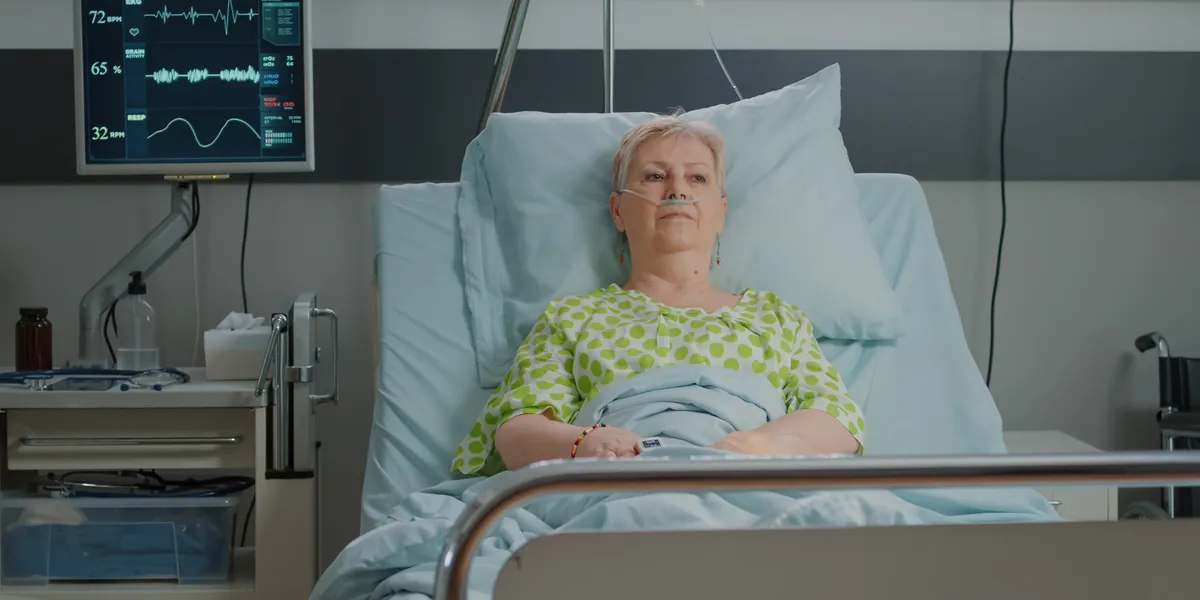
The next months passed in a blur of hospital corridors, paperwork, medication, and fear. Our savings began disappearing faster than I could comprehend. Treatments were expensive, tests were endless, and soon the small cushion we had built over decades simply vanished.
Then came the loans.
Meanwhile, our daughters worked longer hours to help us. They were still young, but life had forced them to grow up quickly. My husband took whatever temporary work he could find. And I… I became a patient. We searched for doctors for weeks. I saw four specialists before I finally met the man who would change everything.
Mr. Johnson.
At first, he was simply another doctor in a white coat. But something about him was different.
He didn’t rush through appointments. He didn’t glance impatiently at the clock. Sometimes during chemotherapy sessions that lasted more than five hours, he would sit beside me and talk — just so I wouldn’t feel so alone.
My family couldn’t always be there; they were too busy trying to save us.
As we spent more time together, little by little, our conversations changed. At first, we talked about treatment, then about life, and then… about things I had never told anyone before.
I began confessing things to him.
Fighting cancer changes the way you see yourself.
At first, I thought the hardest part would be the pain, the endless hospital visits, the fear of dying. But strangely, none of those things affected me as deeply as something else.
Regret.
Chemotherapy stripped away more than just my hair. It stripped away the illusions I had about my life. Lying in that hospital chair for hours, watching the medication drip slowly through a tube into my veins, I had nothing to do but think. And the more I thought, the more clearly I began to see the person I had been.
A woman who had tried to survive. But not always honestly.
My husband and I had married young. We had our daughters early, and raising children while barely having enough money for rent was not easy. Over the years, we made compromises — small lies here, questionable decisions there.
Nothing criminal, but not noble either.
And children notice these things.
We always told our daughters to be honest, to be kind, to do the right thing. But they had also seen the moments when their parents quietly bent the rules to get through another difficult month.
Because of that, our words never carried the weight we hoped they would.
One afternoon during treatment, I told Mr. Johnson something that had been haunting me for weeks.
“I can’t remember a single truly selfless thing I’ve done in my life,” I said quietly.
He looked at me for a moment, studying my face.
“That’s not unusual,” he replied gently. “Most people are too busy surviving to think about things like that.”
“But what if I die?” I whispered.
The question hung in the room like heavy fog.
Mr. Johnson didn’t answer immediately. Finally, he said something that would stay with me forever.
“Then maybe the question isn’t whether you’ll die,” he said. “Maybe the question is how you’ll live until that moment.”
That night, I made a promise to myself. But waited until the next day to tell my daughters. We were sitting around the same kitchen table where we had shared so many difficult conversations over the years.
“I’ve decided something,” I told them.
They looked at me nervously.
“I’m not going to allow myself to die,” I said slowly, “until I bring something truly good into this world.”
My younger daughter looked confused. “What does that mean?”
“It means,” I said, “that before my life ends, I want to do at least one thing that makes this world brighter.”
At the time, none of us realized how seriously I meant it.
Months passed, and treatments continued. And then, slowly, unbelievably, my body began to recover. The doctors called it remission.
Cancer had lost the fight.
But strangely enough, defeating the disease felt less important to me than something else that had changed inside me.
I was no longer the same person.
The very first thing I did after finishing treatment was visit Mr. Johnson. He was reviewing paperwork when I walked into his office.
“You look healthier,” he said with a small smile.
“I feel different,” I replied.
“How?”
I hesitated before answering. “I want you to teach me something.”
He raised an eyebrow. “And what would that be?”
“What real kindness is.”
For a moment, he just looked at me — and then he laughed softly. “That’s a strange request for a doctor.”
“Maybe,” I said. “But you’re the only person I know who actually lives that way.”
He thought about it for a moment. Then he nodded.
“Alright,” he said. “If you’re serious… come with me tomorrow.”
The next morning, I followed him to a small charity center on the edge of the city. There were volunteers preparing food for homeless people. At first, I felt awkward and out of place.
But Mr. Johnson simply handed me a pair of gloves and said, “Start helping.”
So I did.
The following week, we visited an animal shelter and fed abandoned dogs, cleaned cages. Another day, we delivered groceries to elderly people who had no one else to help them.
Simple things.
But somehow those small acts felt more meaningful than anything I had ever done before. I began spending more and more time doing these things. I felt like a student, and Mr. Johnson was my teacher.
But while my heart was becoming lighter, our family life was becoming more complicated. Our debts had not disappeared. If anything, they had grown.
One evening, my husband finally confronted me. We were sitting in the living room, surrounded by unpaid bills.
“Darling,” he said carefully, “have you thought about finding a job?”
I knew this conversation was coming.
“You see how hard things are right now,” he continued.
I nodded slowly. “I know.”
“So… have you thought about working again?”
I hesitated before answering. “But I can’t,” I said quietly.
He frowned. “Why not?”
“Because every day I’m busy doing good deeds.”
The words sounded strange even to my own ears. My husband stared at me as if he didn’t recognize the woman sitting in front of him.
“But that doesn’t bring in a single dollar,” he said.
I understood what he meant. But something inside me had changed so deeply that I could no longer explain it in a way that made sense to him. All I knew was that helping others felt… necessary.
Almost like breathing.
And yet, while I was spending my days with Mr. Johnson helping strangers, my husband and daughters were working harder than ever to keep our family afloat.
I could feel the resentment growing. But I didn’t stop. I couldn’t. Because I had no idea that the most important test of everything Mr. Johnson had taught me… was still waiting ahead.
And it would begin with a phone call that none of us expected.
The phone call came on a quiet morning.
I still remember the way the sunlight fell across the kitchen table. My husband had already left for work, and my daughters were out as well. When the phone rang, I almost ignored it. But something made me answer.
“Hello?”
A fragile voice replied on the other end.
“Is this Mrs. Miller?”
“Yes.”
There was a small pause.
“This is Margaret… Dr. Johnson’s mother.”
My heart tightened immediately.
Mr. Johnson had died only a few weeks earlier. Even now, it felt unreal to say those words. After his passing, I threw myself into organizing his funeral. For two weeks, I worked from morning until evening, arranging everything — the ceremony, the guests, the flowers.
I even organized a memorial dinner at our home and invited people whose lives he had touched — patients, colleagues, nurses. I cooked for hours, preparing a large meal for everyone who came to honor him.
My husband had paid for all of it.
And although he never argued openly, I could feel the silent frustration in the way he avoided looking at me.
To him, it must have seemed like another one of my strange obsessions — helping others while our own family was drowning in debt. But I couldn’t do it any other way.
Mr. Johnson had saved my life, and the least I could do was honor his.
After the funeral, I began visiting his mother. She lived alone in a quiet old house at the edge of the city.
Ninety years old and completely alone.
The first time I visited, she opened the door slowly, leaning on a wooden cane. Her eyes were tired, but kind — the same kind eyes her son had.
I started bringing groceries whenever I visited.
Sometimes I cooked for her, and other days we sat together and talked. And the more we talked, the more I began to understand something important.
Mr. Johnson had not become the man he was by accident. His mother had raised him with an extraordinary moral compass. She believed in kindness not as a concept, but as a way of life. She had taught him through example. Just as he had unknowingly begun teaching me.
One afternoon, while I was putting groceries into her kitchen cabinets, she suddenly spoke. “You know,” she said quietly, “I don’t have anyone left anymore.”
I turned toward her. She was sitting by the window, watching the street.
“My son was everything to me,” she continued. “And now he’s gone.”
Her voice trembled slightly. “But I’ve been thinking about something.”
She looked at me. “I want everything I have to end up in good hands.”
At first, I didn’t understand what she meant.
So that day when I heard her voice on the phone, asking me to go with her to a lawyer’s office, I assumed she needed help with paperwork.
But when the documents were placed in front of me, I felt my hands begin to tremble.
“Please sign here,” the lawyer said calmly.
Inheritance documents.
Margaret was transferring her property to me.
Fifty thousand dollars.
And the house.
When I returned home that day and told my family, they stared at me as if I had just told them an implausible story.
“We paid off all our debts,” I said quietly.
My husband leaned against the counter, speechless.
My daughters looked at each other in disbelief.
“And the house?” my younger daughter asked.
“Yes,” I said.
“It’s ours now.”
But tell me… do you believe kindness always finds its way back to us? Let us know your thoughts.