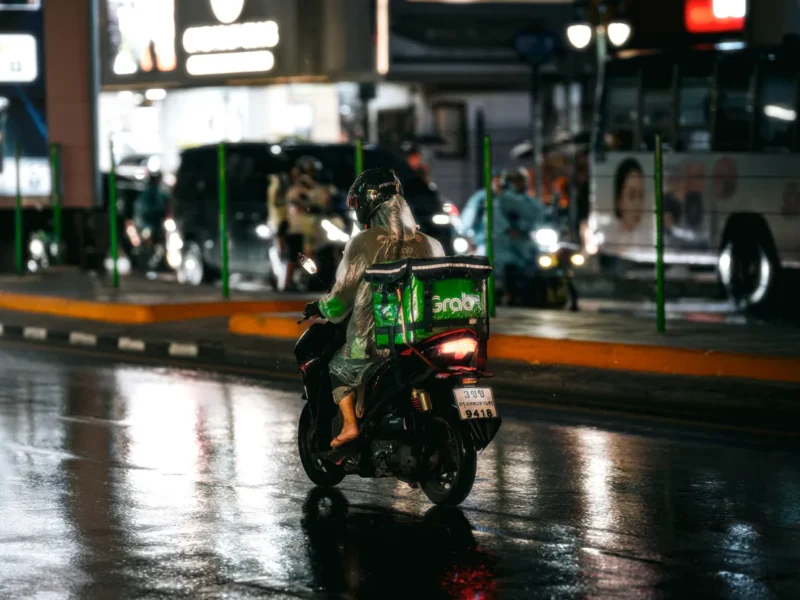
At exactly 11:57 p.m., while fireworks were already being loaded into launch tubes across the city of Columbus, Ohio, a nineteen-year-old girl named Emily Carter stood alone on a frozen sidewalk with one hand pressed to her stomach and the other gripping a plastic grocery bag.
Snow drifted lazily around her, soft and quiet, like the world was holding its breath.
Emily bent forward as another wave of pain ripped through her body—deep, tightening, undeniable.
She whispered to herself, “Please… not now.”
But her body didn’t care that it was New Year’s Eve.
It didn’t care that she had nowhere to go.
It didn’t care that the world was about to celebrate.
Her baby was coming.
1
Three hours earlier, Emily had been ringing doorbells.
Not strangers’ doors—his door.
Mark Reynolds’ porch light glowed warmly against the snow, promising safety, or at least warmth. Emily had stood there for nearly a full minute before knocking, rehearsing the words in her head.
Please let me stay.
I’m in pain.
I’m carrying your child.
When Mark opened the door, the smell of cologne and champagne spilled out. Laughter echoed behind him. A flat-screen TV blared a countdown special.
He froze when he saw her.
“Emily?” His voice was sharp, annoyed. “What are you doing here?”
“I… I didn’t know where else to go,” she said quietly. “I think I’m in labor.”
Mark’s eyes flicked to her stomach, then past her, like he was checking if anyone was watching.
“You can’t be serious.”
“I am,” she whispered. “Mark, please. I just need help.”
From inside, a woman’s voice called out, playful and impatient.
“Who is it, babe? The pizza?”
Mark stepped outside and pulled the door shut behind him.
“You need to leave,” he said, lowering his voice. “Now.”
Emily stared at him, stunned. “Mark, I’m eight months pregnant.”
“And?” he snapped. “You said you were taking care of it.”
Her throat tightened. “I said I’d try.”
He crossed his arms. “I can’t deal with this tonight. It’s New Year’s. My parents are here. My fiancée is here.”
Fiancée.
The word hit harder than any contraction.
“You’re engaged?” Emily asked.
“That’s none of your business.”
“It is when I’m carrying your baby.”
Mark’s jaw clenched. “Look, Emily, I gave you money. I told you not to come back. If you want to go to the hospital, call an Uber.”
“I don’t have money,” she said. “And my phone—”
“I don’t care,” he interrupted. “You made your choices.”
He opened the door, stepping back inside. The lock clicked.
Emily stood there long after the laughter resumed.
Then another contraction hit.
And she turned away.
2
Emily hadn’t always been alone.
Two years earlier, she had been a senior at Westland High School, dreaming of becoming a nurse. She volunteered at a local nursing home, took AP biology, and worked weekends at a grocery store to save for community college.
Her mother, Linda Carter, raised her alone after Emily’s father died in a construction accident when she was eight.
Linda worked two jobs—day shifts at a dental office, night shifts cleaning offices downtown. She was tired all the time, but she loved her daughter fiercely.
When Emily met Mark during her first semester at Columbus State Community College, she thought she’d found someone steady. He was older—twenty-six—already working in IT. He seemed mature, confident, responsible.
He liked that she was young.
She liked that he seemed sure of himself.
It started with coffee dates. Then movie nights. Then nights that blurred together.
When Emily found out she was pregnant, she cried in the bathroom of a Target, sitting on the floor with the test in her hand.
Mark didn’t.
He went quiet. Calculating.
“This isn’t the right time,” he said. “You know that.”
“I know,” she replied. “But it’s happening.”
He promised support at first. Doctor visits. “We’ll figure it out.”
Then the calls slowed.
Then the texts.
Then the money appeared—quietly, like hush payments.
Then he stopped answering altogether.
When Emily finally told her mother, Linda stared at her in shock.
“Oh, Emily,” she said, sinking into a chair. “Why didn’t you tell me sooner?”
“I was scared,” Emily whispered.
Linda hugged her tightly. “We’ll get through this. Together.”
But three months later, Linda collapsed at work.
A massive stroke.
She died two days later without waking up.
Emily lost her mother, her home, and her anchor—almost all at once.
The landlord sold the house.
Emily moved between couches until the favors ran out.
And by New Year’s Eve, she was alone.
Eight months pregnant.
With nowhere to sleep.
3
The grocery bag Emily carried held two things: a blanket she’d taken from a laundromat, and a folded hospital brochure she’d grabbed from a clinic weeks earlier.
She’d planned to go to the hospital when labor started.
She just hadn’t expected it to start on a night when taxis were scarce, buses stopped early, and everyone else was kissing and counting down.
Her phone battery had died hours ago.
Another contraction seized her body.
She doubled over, gasping.
Across the street, a couple stumbled out of a bar, laughing, champagne sloshing from plastic cups.
Emily wanted to scream.
Instead, she started walking.
One slow step at a time.
Toward the lights of Riverside Methodist Hospital, still nearly a mile away.
4
Inside the hospital, Sarah Whitman, a labor and delivery nurse with fifteen years of experience, checked her watch.
“Three minutes to midnight,” she muttered.
The maternity ward was quiet. Most babies avoided holidays, it seemed.
She’d just finished texting her teenage son when the doors burst open.
“Help!” a voice cried. “Please—help me!”
Sarah looked up.
A young girl stumbled in, pale, shaking, snow in her hair.
Her pants were soaked.
“Oh my God,” Sarah said, already moving. “Sweetheart, are you in labor?”
“Yes,” Emily gasped. “I think… I think my water broke.”
Sarah grabbed a wheelchair and guided her in. “What’s your name?”
“Emily.”
“How far along are you?”
“Thirty-five weeks,” she said, then cried out as another contraction hit.
Sarah’s smile softened. “You did good getting here.”
As fireworks exploded outside, lighting up the windows, Sarah wheeled Emily into a delivery room.
“Welcome to the New Year,” she whispered.
5
Emily labored through midnight.
Through the cheers echoing from outside.
Through pain she didn’t know a body could hold.
There was no one holding her hand.
No partner pacing the room.
No mother whispering encouragement.
Just nurses who rotated in and out, kind but busy.
Between contractions, Emily stared at the ceiling and thought of her mother.
I’m sorry I didn’t listen.
I’m sorry I didn’t tell you sooner.
I wish you were here.
At 12:41 a.m., her baby’s heartbeat dipped.
Doctors rushed in.
“Emily, listen to me,” the doctor said firmly. “We need you to push. Right now.”
Emily screamed, her body straining, her mind breaking open.
She pushed until she thought she would die.
Then—
A cry.
Sharp. Small. Alive.
“It’s a girl,” the nurse announced.
Emily sobbed.
They placed the baby on her chest—tiny, red, warm.
Emily kissed her damp forehead.
“Hi,” she whispered. “I’m your mom.”
Fireworks boomed again in the distance.
The world was celebrating.
But Emily’s world had just begun.
6
Two days later, a hospital social worker named Angela Ruiz sat beside Emily’s bed.
“Do you have somewhere to go?” Angela asked gently.
Emily shook her head.
“Any family?”
“My mom passed away,” she said quietly.
Angela nodded, jotting notes. “What about the baby’s father?”
Emily hesitated. Then told her everything.
Angela listened without interrupting.
“That’s not okay,” she said when Emily finished. “He has responsibilities.”
“I don’t want trouble,” Emily said quickly. “I just want to take care of my baby.”
Angela smiled softly. “Sometimes, those are the same thing.”
7
Mark Reynolds watched the news absentmindedly as he nursed a headache on New Year’s Day.
His fiancée, Rachel, was still asleep upstairs.
His phone buzzed.
Unknown number.
He ignored it.
It buzzed again.
Then again.
Finally, irritated, he answered.
“Mark Reynolds,” a calm voice said. “This is Angela Ruiz from Riverside Methodist Hospital. I’m calling regarding Emily Carter and the child born on January first.”
Mark’s stomach dropped.
“She gave birth,” Angela continued. “To your daughter.”
Silence.
“We’ll be in touch regarding paternity and child support,” she added. “You may also want to inform your fiancée.”
The line went dead.
Mark stared at his phone.
Fireworks residue still littered the streets outside.
And for the first time, the celebration felt very far away.
8
Rachel didn’t scream when she found out.
She didn’t cry.
She simply packed a suitcase and left.
Mark tried calling. Texting. Apologizing.
Nothing worked.
Within weeks, court papers arrived.
A paternity test confirmed what Mark already knew.
He was a father.
And fathers, the court reminded him, had obligations.
9
Emily moved into a transitional housing program for young mothers.
It wasn’t perfect.
But it was warm.
Safe.
Her daughter, Lily, slept curled against her chest each night, unaware of how close she’d come to being born alone on a sidewalk.
Emily enrolled in night classes again.
She worked part-time at a clinic, pushing herself forward one exhausted step at a time.
Sometimes, when Lily cried at 3 a.m., Emily felt overwhelmed.
But then she remembered the night she’d walked through snow and pain to bring her daughter into the world.
And she whispered, “We made it.”
10
Years later, Emily would tell Lily the story.
Not to shame her father.
Not to relive the pain.
But to show her something important.
That even when the world is loud with celebration…
Even when doors close…
Even when you are alone and scared…
Life still finds a way.
And sometimes, the strongest beginnings happen in the quiet moments no one else sees.